

After infidelity, each partner gets to decide whether to try to rebuild trust. A person who broke an agreement can take responsibility, disclose information the other person needs to make decisions, and follow through on changes. The other partner may still choose to take time, set conditions around contact or leave.
Be specific about ongoing contact
Explain what has ended and what contact, if any, remains. If contact is unavoidable, such as for work, describe the circumstances honestly and discuss practical limits you can follow. People can agree to revisit those arrangements when something changes.

Listen, answer and make room for choice
Ask which questions would be helpful now and whether a later conversation would feel more manageable. A clear apology identifies the conduct and its impact. Ask what practical support the person wants, including time or privacy. If the situation has a sexual-health implication, consider speaking with a healthcare professional about appropriate testing and protection.
Read more about communicating during a difficult conversation. A partner may welcome care while needing distance or declining touch. Agree on contact, affection and privacy each time they become a question.
Consider support and your own safety
A qualified relationship counsellor may help if both people freely choose to attend. If either person is afraid of retaliation, monitoring or violence, consider getting individual support before attempting joint conversations. Someone who is struggling after a betrayal may also want individual support for their confidence and daily life. See this guide on working with low self-esteem.
Agree on a repair that both partners can observe
If the other person is a colleague you must contact, explain exactly which work conversations remain necessary and what steps you’ll take to keep them professional. Agree on how and when you’ll talk about difficulties in that plan, including what to do if work arrangements change.
A partner can need time, decline affection or decide to leave. You can offer an honest account, attend to any practical needs and sustain the commitments you chose. If either person is afraid of the other, seek individual support before a joint conversation.
Read the infographic in text
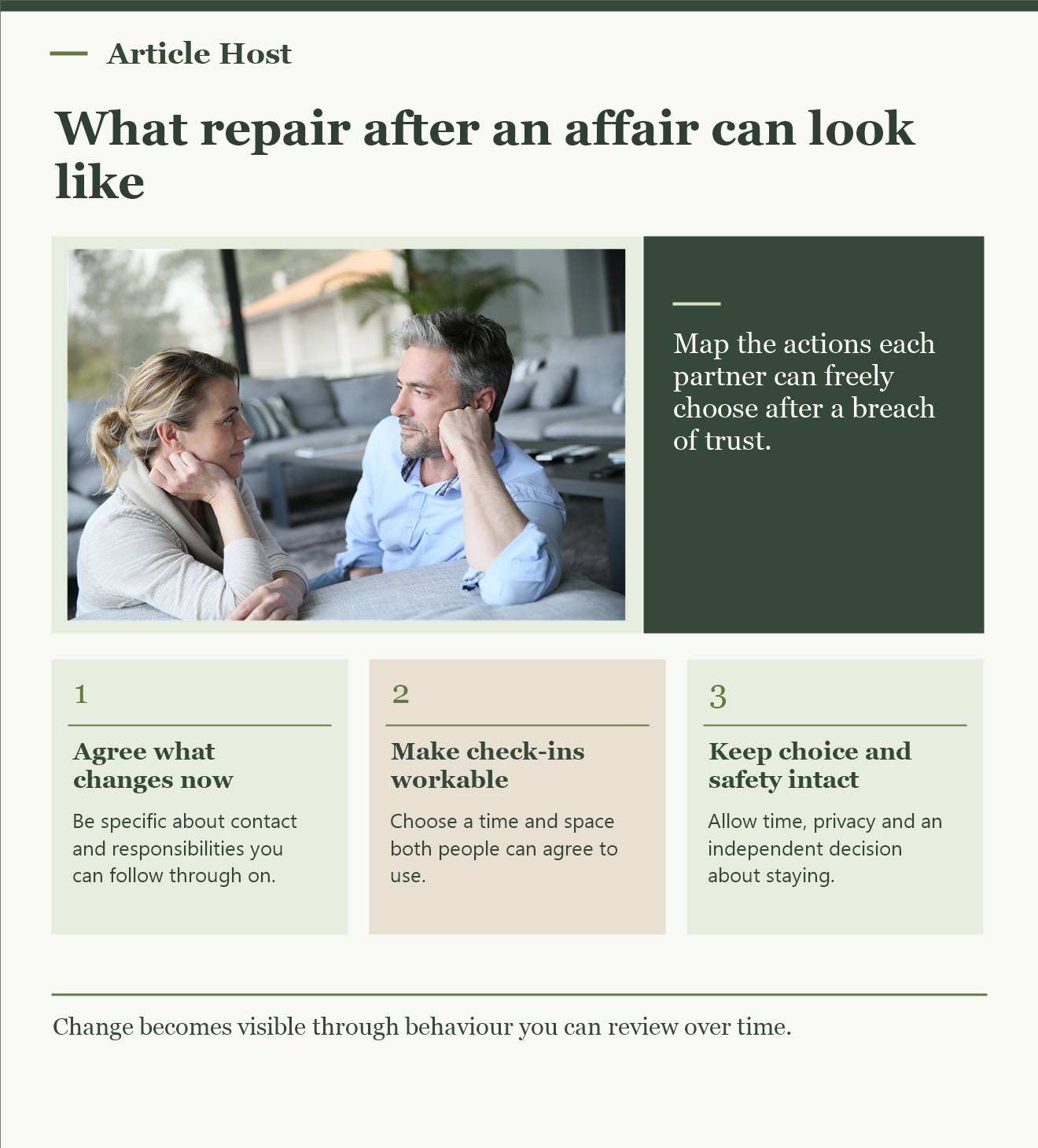
What repair after an affair can look like
Map the actions each partner can freely choose after a breach of trust.
- Agree what changes now Be specific about contact and responsibilities you can follow through on.
- Make check-ins workable Choose a time and space both people can agree to use.
- Keep choice and safety intact Allow time, privacy and an independent decision about staying.
Change becomes visible through behaviour you can review over time.