

Resentment may start when something unfair, hurtful or exhausting keeps coming back. It can draw your attention to a broken agreement, a burden you have been carrying alone or a loss you never had a chance to process. What you do with that information can depend on whether the situation is still happening.
Describe the recurring part
Write down one example, what happened afterwards and what you needed then. If the situation is recent, decide whether the problem is a practical responsibility you can renegotiate. When it’s an older hurt, you may need time or someone who can hear what happened.
Choose whether to have a conversation
If you feel safe and the relationship leaves room for ordinary disagreements, describe what needs to change and ask what the other person can do. If you expect threats, pressure or retaliation, take the effect seriously and consider private support before starting a conversation.

Let forgiveness be a separate decision
You can set a limit whether or not you feel ready to forgive. If someone apologises, their actions over time can help you decide whether more trust or contact would be welcome. For a longstanding hurt, a therapist or other qualified support may help you work through what you still carry.
Turn a repeated grievance into a specific choice
If you resent a sibling who leaves the organising of every family appointment to you, make a list of the tasks you carry. A request could be, “Can you take responsibility for the Tuesday appointment and the follow-up call?”
If the answer is no, reconsider what you can continue to take on. When resentment comes from past harm, it may be safer or more useful to talk about the loss with someone you trust than to approach the person involved.
Read the infographic in text
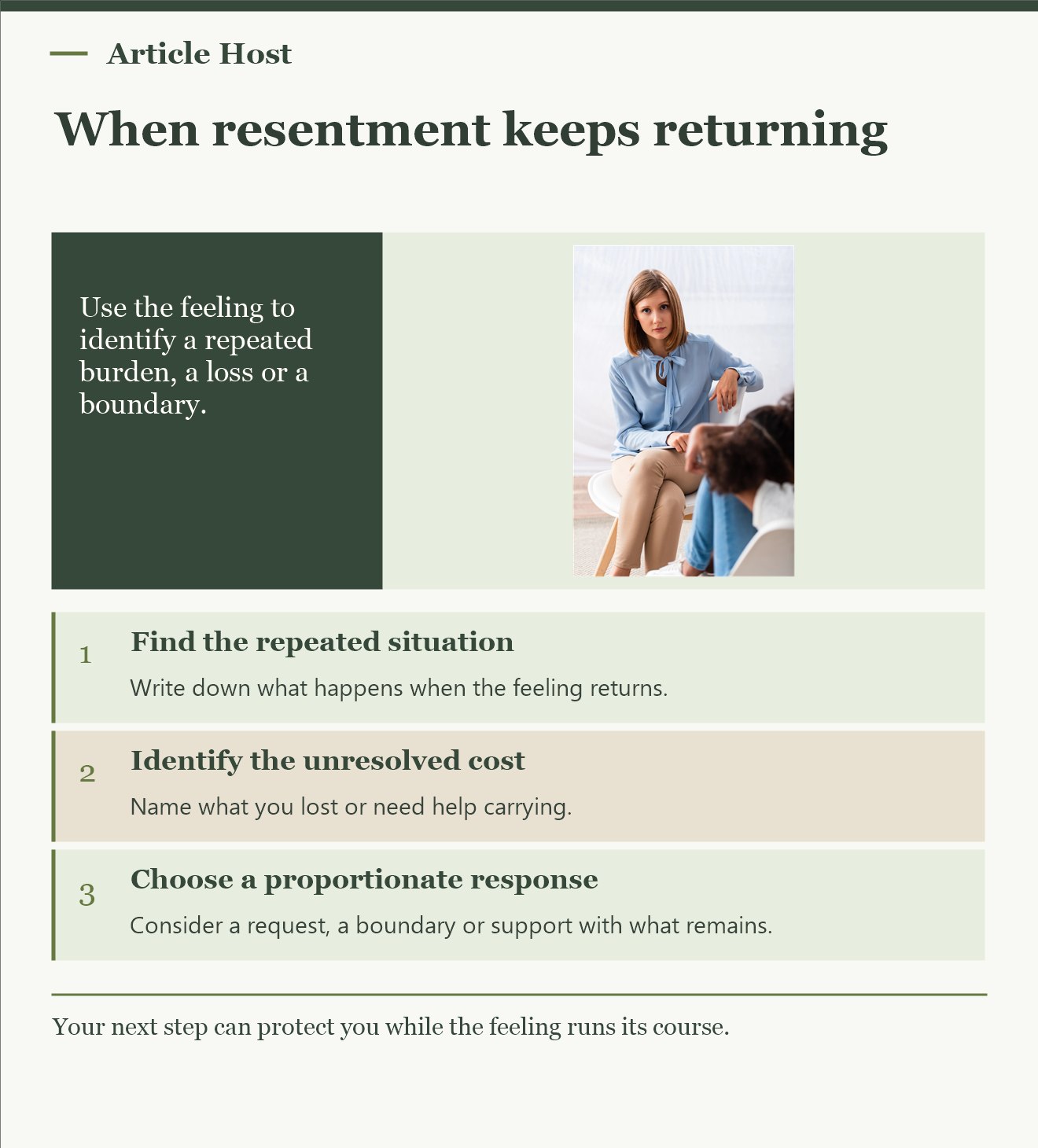
When resentment keeps returning
Use the feeling to identify a repeated burden, a loss or a boundary.
- Find the repeated situation Write down what happens when the feeling returns.
- Identify the unresolved cost Name what you lost or need help carrying.
- Choose a proportionate response Consider a request, a boundary or support with what remains.
Your next step can protect you while the feeling runs its course.