

After 40, a useful health routine takes account of your schedule, mobility, food access, sleep and personal health history. Pick one change that will still make sense on an average week. You can revisit your plan as symptoms, responsibilities or priorities change.
Arrange meals around the day you have
Choose regular opportunities to eat that fit your appetite and schedule. Keep flexible, familiar choices around, such as frozen vegetables, beans or fish, whole grains, fruit and foods you already cook. The Dietary Guidelines for Americans cover varied eating patterns. If medication or a health condition affects your meals, ask a healthcare professional about timing, food choices and any specific restrictions.

Make movement and rest fit your current abilities
If your day is mostly seated, consider a short walk, a seated movement break or other accessible activity. Start where you are and increase gradually as appropriate. Protect time for sleep where your responsibilities allow. Persistent sleep problems, unusual fatigue or symptoms during activity are worth discussing with a healthcare professional.
Ask about preventive care
Ask your healthcare professional what screening, vaccinations or check-ins fit your age, health history and location. Bring questions about family history and when a test would be due. In the United States, the USPSTF’s recommendations describe which populations each recommendation applies to.
Start with a week that resembles your usual life
Choose two short walks or another accessible activity. Plan one meal you enjoy using ingredients you already buy. If sleep regularly gets cut short by late tasks, pick one evening when you can end the task earlier.
Add a reminder to ask a healthcare professional which preventive checks fit your history. For adults, the CDC describes how to build toward regular aerobic and strengthening activity and explains that shorter sessions can contribute.
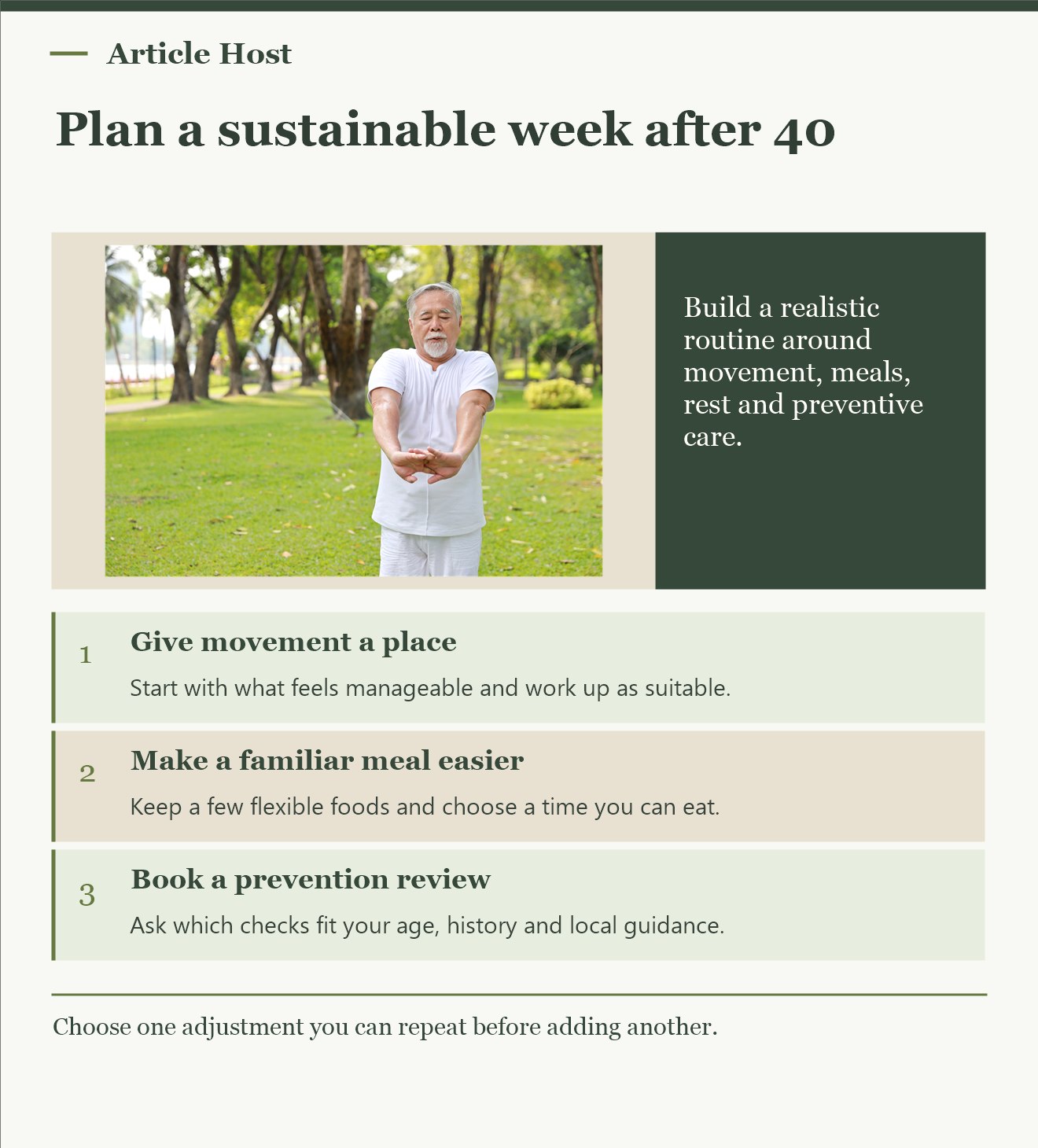
Read the infographic in text
Plan a sustainable week after 40
Build a realistic routine around movement, meals, rest and preventive care.
- Give movement a place Start with what feels manageable and work up as suitable.
- Make a familiar meal easier Keep a few flexible foods and choose a time you can eat.
- Book a prevention review Ask which checks fit your age, history and local guidance.
Choose one adjustment you can repeat before adding another.
Frequently asked questions
1. Do I need to change everything when I turn 40?
Start with a realistic change that addresses an ordinary concern. Your daily routine and health history matter when choosing what to work on first.
2. Is there one meal schedule that works for everyone?
People have different schedules, preferences and health needs. Choose useful opportunities to eat and ask a clinician if medication or a condition affects timing.
3. Can short activity sessions count?
Yes. Short sessions can contribute to your weekly activity. Start at a level you can manage and adjust for your abilities and medical needs.
4. Which preventive checks should I ask about?
Ask what screening, vaccinations and routine checks fit your age, health history and location. Family history and earlier results may affect the advice.
5. What if tiredness makes a new routine hard to follow?
Choose one small step with room for rest. Seek clinical advice if tiredness is persistent, sudden, unusual for you or affecting daily activities.