

When life feels heavy, “letting go” can mean many things: putting off a nonessential task, changing an expectation, making space for a feeling or deciding how much contact you want with someone. It does not have to mean forgetting what happened or becoming cheerful on command.
Start by asking what is making today difficult and what you can realistically change. Some burdens need practical help, time or professional support. Others may ease when you stop asking yourself to handle everything perfectly. Choose one area to explore, and keep the pace your own.
On this page
Make one space easier to use
If your surroundings are adding to the strain, choose a small area with a specific purpose. You might clear enough table space for a meal, put frequently used items within reach or make a safer path through a room. You do not have to organise your whole home.
Keep important documents, needed equipment and sentimental belongings separate from anything you are ready to give away. An item that does not suit your life today may still deserve a slower decision. You can set it aside and return to it rather than make an irreversible choice while overwhelmed.
Consider access, energy and help you might need. A room can be unfinished and still work better for you. Tidying is an option for a practical difficulty, rather than proof that you have resolved the emotions connected with it.
Speak to yourself with more fairness
Changes in your appearance, energy or circumstances do not require an explanation that makes you less worthy of care. Notice when a description turns into an insult: “I am tired and my clothes feel uncomfortable” is different from “I have let myself become a failure.”
The NHS guide to reframing unhelpful thoughts suggests examining the evidence and considering another perspective. A neutral sentence can be useful; you do not have to force a compliment that feels unconvincing.
Try connecting the thought to a need. Perhaps you need clothes that fit, a rest, clearer information or someone to discuss a concern with. Practical care can matter even when your self-talk remains difficult.
Make room for feelings and boundaries
Anger, sadness, regret and disappointment are not objects you must discard before good things can happen. You can acknowledge a feeling while choosing how to respond. That might mean pausing a conversation, writing a private note or telling someone what you need.
If a reflective ritual matters to you, keep it optional and safe. Writing something down and closing the notebook may be enough. You do not need to destroy photographs, burn possessions or make a dramatic gesture to show that you are ready for change.
Forgiveness is a personal choice. It does not require renewed contact, trust or removal of a boundary. You can seek peace, protection or support without deciding how you will eventually feel about the person who hurt you. The related article on forgiveness and boundaries offers another place to consider your own pace.
Respond to fear without judging it
Fear may point to a real risk, uncertainty or a situation that reminds you of something difficult. It is not a failure to feel it. First consider whether something needs attention now, such as leaving an unsafe conversation or asking for information before making a decision.
When there is no immediate action to take, choose something ordinary that helps you return to the present: notice where you are sitting, look around the room or attend to a simple task. You can stop an exercise that makes you feel worse and try another approach.
If fear or anxiety keeps interrupting sleep, work, relationships or daily activities, appropriate support can help you consider what is happening. You do not have to become fearless before asking for help.

Choose what needs attention now
Sort the demands in front of you into something urgent, something that can wait and something you could ask for help with. Give the urgent task a concrete next step. “Find the appointment letter” is more workable than “sort out everything I have neglected.”
Some deadlines have consequences and deserve advice or an early conversation. Other expectations may be optional, outdated or beyond the resources available to you. You can renegotiate a commitment or explain that you cannot take on another task without promising that everything will eventually get done.
Decide where good enough is enough
Ask what the task actually requires. An everyday message may only need to be clear and kind; it may not need an hour of revision. A meal can meet your needs without being elaborate. Define a stopping point before you begin if that makes the task easier.
Use that flexibility thoughtfully. Safety, consent and important professional requirements still deserve attention. “Good enough” is a way to reconsider unnecessary pressure, not a reason to ignore a serious concern. You can also decide that resting or seeking help is the appropriate next step.
Leave room for repair and support
In a disagreement, consider whether you want to understand a specific issue, make a request or set a limit. You can acknowledge another person’s point without accepting an inaccurate claim. You can also apologise for something you did while keeping a necessary boundary.
Affection and reconciliation remain choices for everyone involved. You do not need to offer physical closeness to end an argument, and another person does not have to respond in the way you hope. Where a conversation is unsafe or repeatedly harmful, outside support may be more useful than another attempt to explain perfectly.
The National Institute of Mental Health’s self-care guidance includes realistic priorities and supportive contact. If distress or difficulty managing daily life persists, consider appropriate professional help. For today, choose one action that meets a real need; lasting relief does not have to arrive all at once.
Read the infographic in text
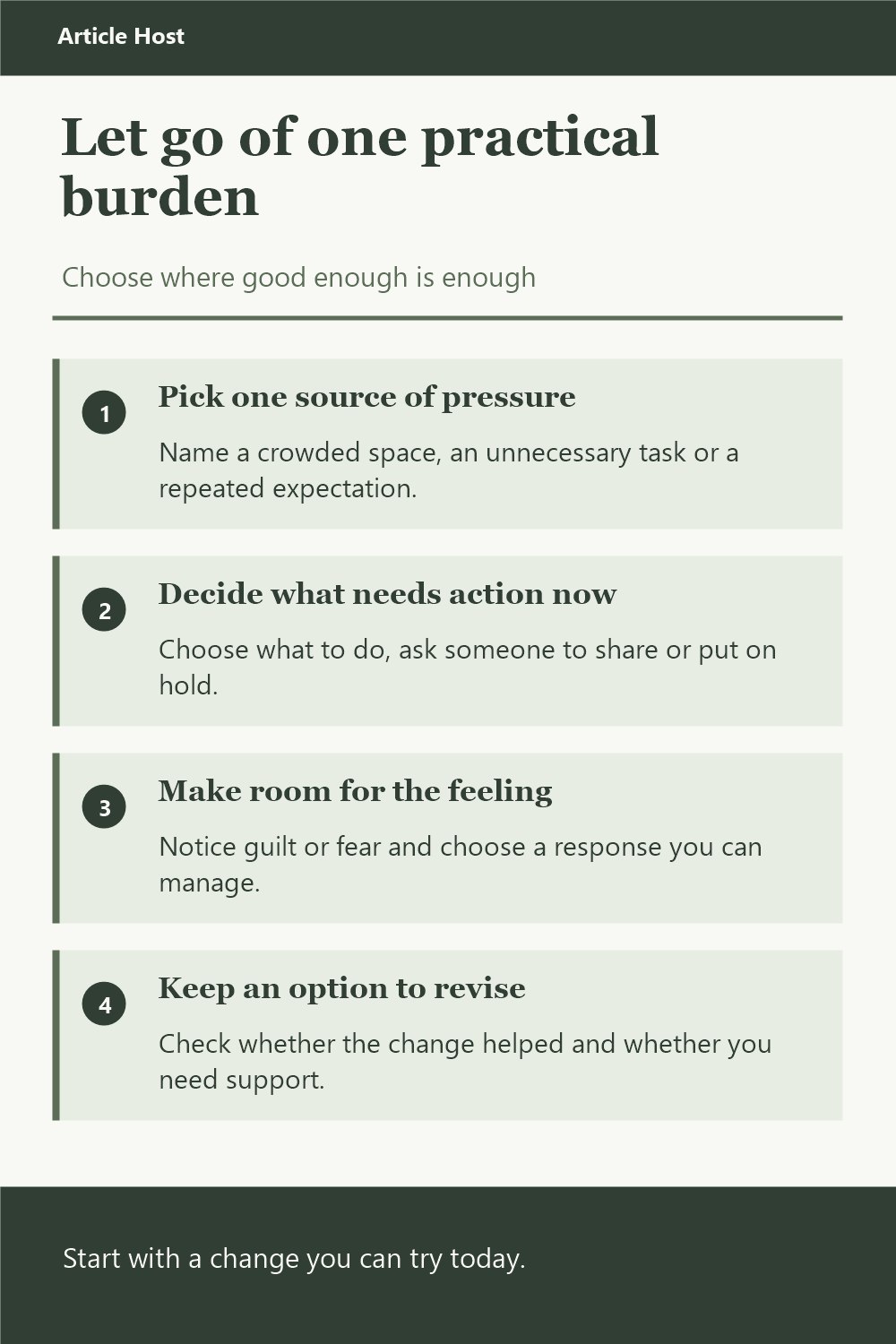
Let go of one practical burden
Choose where good enough is enough
- Pick one source of pressure Name a crowded space, an unnecessary task or a repeated expectation.
- Decide what needs action now Choose what to do, ask someone to share or put on hold.
- Make room for the feeling Notice guilt or fear and choose a response you can manage.
- Keep an option to revise Check whether the change helped and whether you need support.
Start with a change you can try today.