

“Fluid bonding” is an informal term some people use for choosing sexual activity without barriers such as condoms. It does not describe a medical safety status, and people may use it differently. Talk about the specific activities and protection involved rather than relying on the label.
You can feel close to a partner while continuing to use condoms or other barriers. Removing them is not a relationship milestone you owe anyone, proof of trust or a requirement for enjoyable sex. Each person needs a free choice, clear information and room to change their mind.
Possible recent HIV exposure? Seek urgent medical assessment now. The CDC says PEP, emergency medicine to prevent HIV after exposure, must start within 72 hours, and sooner is better. Do not wait for test results. If pregnancy is possible after contraception was absent or failed, contact a pharmacist or sexual health clinic promptly about emergency contraception; available options are time-sensitive.
On this page
1. Define the choice and keep consent specific
Ask what each person is proposing. Does it concern a particular activity, every encounter or only sex between certain partners? An agreement about one activity does not establish consent to another. Consent to sex with a condom does not include permission to remove it.
Either person can decide to keep or restart barriers, pause an activity or stop. A previous agreement does not cancel that choice. If someone argues that using protection means you do not love them, you can decline the change without finding a more persuasive explanation.
2. Understand what barriers can and cannot do
The CDC’s condom guidance explains that correct, consistent use reduces the risk of sexually transmitted infections (STIs) and pregnancy, without eliminating it. The protection depends on the infection and activity. Condoms and dental dams are options worth discussing with a sexual health professional.
Ask for help with fit, materials or discomfort rather than assuming the only choices are unpleasant sex or no protection. Follow the product instructions. You can also choose activities you both want that do not involve the exposure you are trying to avoid.

3. Ask for testing that fits your situation
Feeling well does not establish that you do not have an STI. The CDC’s STI testing guide recommends discussing your sexual history and practices with a healthcare provider to choose appropriate tests. Depending on the activity, testing may involve blood, urine or swabs, including throat or rectal samples.
Do not assume that a request for a “full panel” checks every infection or every relevant body site. Ask which infections were tested, what sample was used and whether follow-up is needed. Explain any recent exposure, symptoms or current prevention medicines to the clinician.
Timing also matters. For example, HIV tests have different window periods: an early negative result may not detect a recent infection. Ask when to test and whether to repeat it. Seek advice now about a concerning exposure rather than delaying care until a test might become conclusive.
4. Discuss results without treating them as a guarantee
Discuss the date and scope of the results, relevant exposures since testing and any follow-up advice. “I tested negative” alone leaves important questions unanswered. Your result also cannot establish another person’s status.
If someone has an STI, ask a clinician about that specific infection, treatment and prevention. Avoid describing a person as “clean” or “dirty.” A diagnosis is health information, not a judgment about character or fidelity.
Treatment and transmission cannot be reduced to one rule for every infection. In particular, the CDC explains Undetectable = Untransmittable (U=U): a person living with HIV who takes treatment and maintains an undetectable viral load does not transmit HIV through sex. That does not prevent other STIs or pregnancy. Discuss your prevention needs with your healthcare team.
5. Make agreements you can revisit
Be specific about other partners, barrier use and what information you need before deciding about sex. An exclusivity agreement can describe your intentions; it does not replace testing, account for earlier exposures or provide biological protection by itself.
- What activities and partners does the agreement cover?
- What would lead either of us to pause or restart barriers?
- How will we discuss a new exposure, a broken condom or a change in partners?
- Who will arrange testing, appointments and supplies?
You can ask for time before answering. Our guide to making room for your needs when you want connection offers practical ways to express a preference or limit. No agreement requires continuing sex you no longer want.
6. Plan separately for pregnancy prevention
If the activity could result in pregnancy and you do not want that outcome, discuss contraception before changing condom use. A clinician or pharmacist can explain options, suitability and what to do if a method is missed or fails. Pregnancy prevention and STI prevention are separate questions.
Share the practical responsibility: access to supplies, costs, appointments and the plan for a problem. If contraception has already failed, seek prompt advice about emergency options. You do not need to wait for a relationship conversation before arranging healthcare.
7. Start the conversation without pressure
Choose a time when you can discuss the decision without an expectation that sex will immediately follow. You might say, “I want us to talk about testing and protection. I am keeping condoms for now, and I would like us to ask a clinic our questions.”
If you disagree, keep your own limit rather than negotiating under pressure. If you fear retaliation or a partner interferes with contraception, seek individual support from a trusted person or an appropriate local service, using a safer device if needed.
A useful next step may be a clinic appointment, a shared list of questions or a clear decision to continue barriers. You do not need to agree to condom-free sex to show care for a partner. Respect includes taking each person’s health, choices and uncertainty seriously.
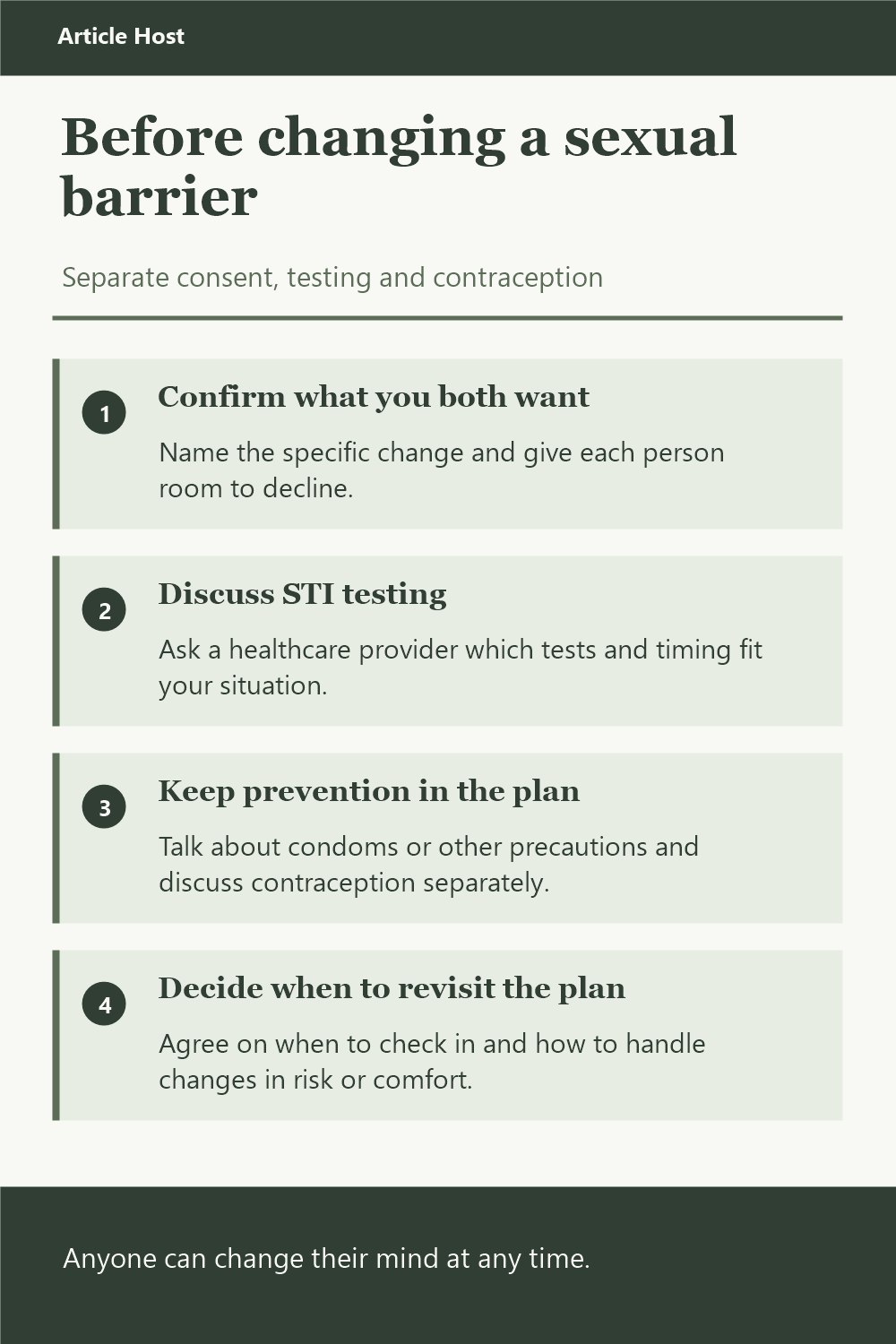
Read the infographic in text
Before changing a sexual barrier
Separate consent, testing and contraception
- Confirm what you both want Name the specific change and give each person room to decline.
- Discuss STI testing Ask a healthcare provider which tests and timing fit your situation.
- Keep prevention in the plan Talk about condoms or other precautions and discuss contraception separately.
- Decide when to revisit the plan Agree on when to check in and how to handle changes in risk or comfort.
Anyone can change their mind at any time.