

Finding out that someone you are dating already has a partner can change what you thought the relationship was. You might feel hurt, angry, embarrassed or unsure what to believe. You may also still care about the person. There is no single feeling you have to have.
If they told you they were single, you made choices without information they withheld. You can take time to understand what happened and decide what to do now. The questions below can help you consider your needs without accepting blame for someone else’s deception or relying on promises about the future.
On this page
Separate responsibility from self-blame
The person who misrepresented their situation is responsible for that deception. You did not cause it by being insufficiently suspicious. Looking back may reveal things you would question now, but hindsight is different from having that information at the time.
What you choose after learning the truth matters too. You can acknowledge the effect on everyone involved while recognising that you did not knowingly agree to a hidden relationship. Try replacing “I should have known everything” with a more accurate statement: “I know more now, and I can decide what I am willing to take part in.”
Explanations about boredom, unmet needs or an unhappy marriage do not transfer responsibility to either partner. They also do not establish that the person will leave another relationship, remain faithful or tell the truth in future. Consider what they actually do rather than treating an explanation as a guarantee.

Clarify what you know and what is missing
Separate what you directly know from what you have been told or have inferred. You might know that the person lives with a partner while not knowing what agreements exist between them. A consensually non-monogamous relationship, where everyone involved knows and freely agrees, is different from a relationship kept secret through deception.
If you choose to ask questions, make them specific. Are they currently in another relationship? What did they tell you that was untrue? Does their partner know they are dating? What are they asking you to keep secret? You can decide that evasive or contradictory answers do not give you enough confidence to continue.
You do not need to access private accounts, track someone or contact their workplace to earn permission to step away. You can end or pause a relationship because the information available does not meet your need for honesty. Complete certainty about every detail is not a requirement.
Choose boundaries before relying on promises
Think about what you need now, separately from what you hope might happen. You may want to stop dating, pause contact or decline intimacy while you consider your options. A boundary can be brief: “I did not agree to a hidden relationship. I am taking space and do not want further contact this week.”
If you consider continuing, decide what would need to be different and how you would judge that. Look for clear, consistent information and actions. Repeatedly moving deadlines or requests to wait indefinitely may not fit what you want. You do not owe unlimited time because you have already invested in the relationship.
The NHS guide to healthy relationships discusses listening, honest conversations and boundaries. Those can support a discussion when both people can participate freely. A conversation does not oblige you to reconcile, forgive or agree to a new arrangement.
Consider privacy, other people and safety
Another partner may also have been misled. Avoid treating that person as a rival or assuming they caused the situation. You can recognise their interests without taking responsibility for repairing someone else’s relationship.
If you are considering contacting them, think through your purpose, the privacy of the information involved and possible safety concerns. Avoid public accusations, threats or sharing intimate images or messages. You are allowed to seek confidential advice before deciding whether or how to communicate. You do not have to meet anyone in person to explain yourself.
Keep children out of adult disputes and do not use them as messengers. If you fear a reaction, face threats or feel pressured to meet, prioritise confidential support from someone you trust or a local abuse support service. Use emergency help if there is immediate danger. Another confrontation is not a condition of taking care of yourself.
Take practical steps and review your choice
Choose a short list of immediate needs rather than trying to solve every consequence at once. For example:
- Tell a trusted person what support would help, while asking them to respect your privacy.
- Agree on a safe way to return belongings or change plans if contact is ending.
- Protect your own accounts and review any access you previously shared.
- If you have concerns about sexual health, speak with a qualified healthcare professional about your situation.
- Make room for ordinary meals, rest and responsibilities while you decide what comes next.
When you review your decision, ask whether your boundaries are respected and whether the information you receive has become clearer. You can change your mind about continuing. If the situation is taking over your day, a qualified counsellor or therapist can offer space to work through your own choices without making the decision for you.
You may miss the relationship and still decide it cannot continue. Caring about someone does not require accepting secrecy or waiting for an outcome they cannot promise. One clear boundary and one practical next step can be enough for today.
Make a short plan before asking for another explanation
If someone you’ve been dating tells you their partner did not know about the relationship, write down what was said and what you now need. Consider whether you want to stop contact, retrieve belongings through an agreed arrangement, or speak with a clinician about sexual health if relevant.
You can pause while you decide what contact is safe. Be careful about sending private information to other people or posting accusations publicly, especially if you fear retaliation.
Read the infographic in text
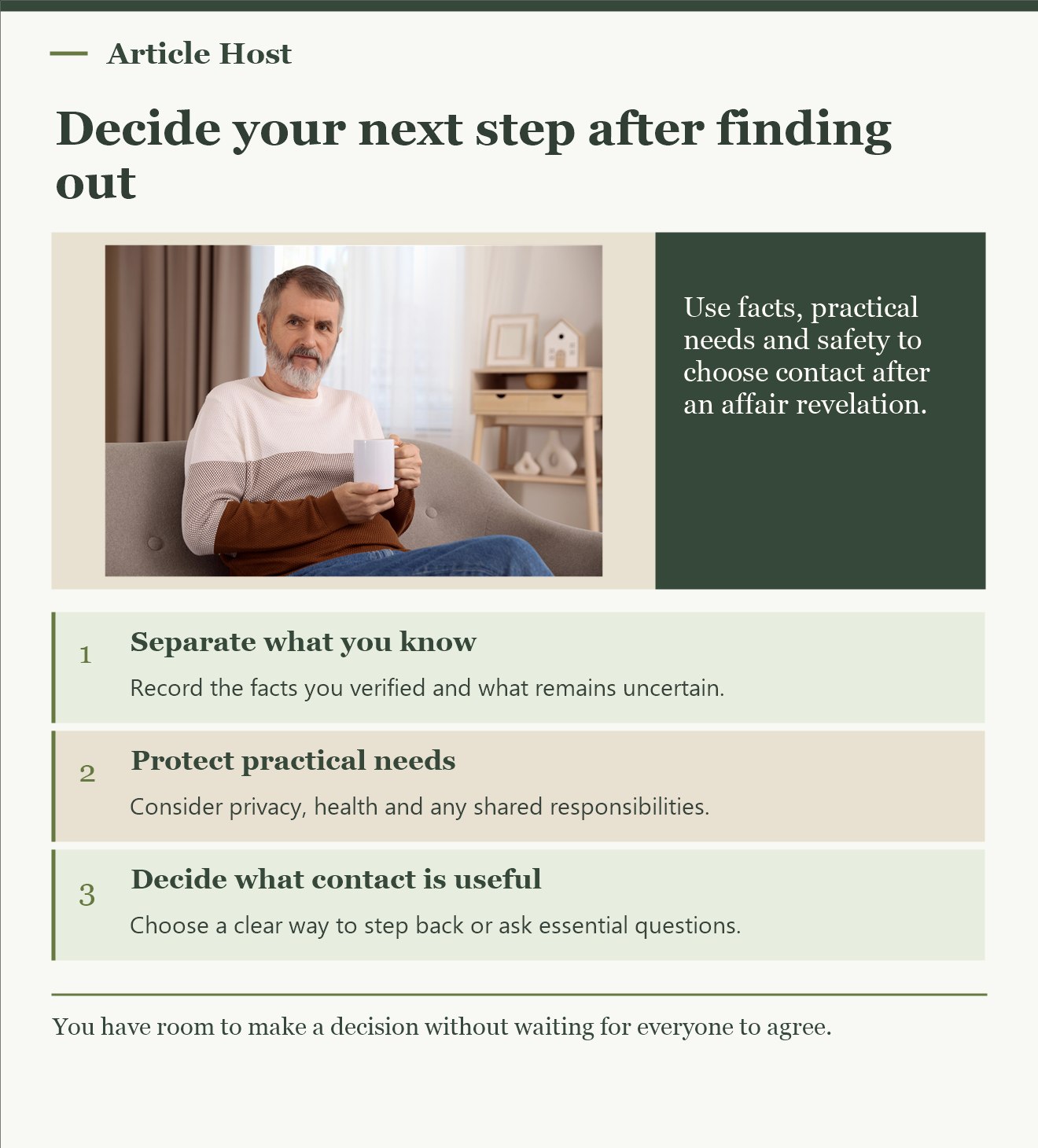
Decide your next step after finding out
Use facts, practical needs and safety to choose contact after an affair revelation.
- Separate what you know Record the facts you verified and what remains uncertain.
- Protect practical needs Consider privacy, health and any shared responsibilities.
- Decide what contact is useful Choose a clear way to step back or ask essential questions.
You have room to make a decision without waiting for everyone to agree.