

Some people use “emotional vampire” to describe an interaction that regularly leaves them exhausted. You can use that feeling as a prompt to look at specific actions and decide which contact you have room for. The phrase is a metaphor, and a difficult exchange cannot establish that someone has a mental health condition.
Look for a pattern
Identify actions you’ve seen more than once, such as insults, repeated requests after a clear refusal or conversations that regularly consume time you had set aside.
Notice how the interaction affects you
Check what it costs in time, attention and recovery. Consider whether the pattern changes when you explain your needs or choose a different setting.
Respond to repeated interruptions
When it feels safe, try a short line such as “I want to finish this thought, then I’ll listen.” You can decide whether to return to a conversation if it continues this way.
Keep a practical limit
Offer a time or topic you can realistically manage. Decide in advance what you’ll do when the limit is reached.
Choose a realistic channel
Some conversations are easier by message, in daylight or at a time when no one is rushed. Consider what helps both people make a clear decision.
Get support when needed
If disagreement repeatedly brings pressure, threats or retaliation, seek private support rather than relying on a scripted conversation.

Review the amount of contact
Notice whether a brief, predictable limit changes the pattern. If it continues, you can decide what contact to accept based on behaviour you can observe.
When most conversations become one-sided
Imagine someone calls late and regularly continues after you say you need to go. If it is safe, choose a predictable limit: “I can talk for twenty minutes on Wednesdays.” End the call at the time you stated, and check how the person responds over a few weeks.
The phrase “emotional vampire” can describe a draining experience in everyday language. Behaviour you can name, such as insults or repeated boundary pushing, gives you better information about what to do next than guessing at someone’s mental health.
Read the infographic in text
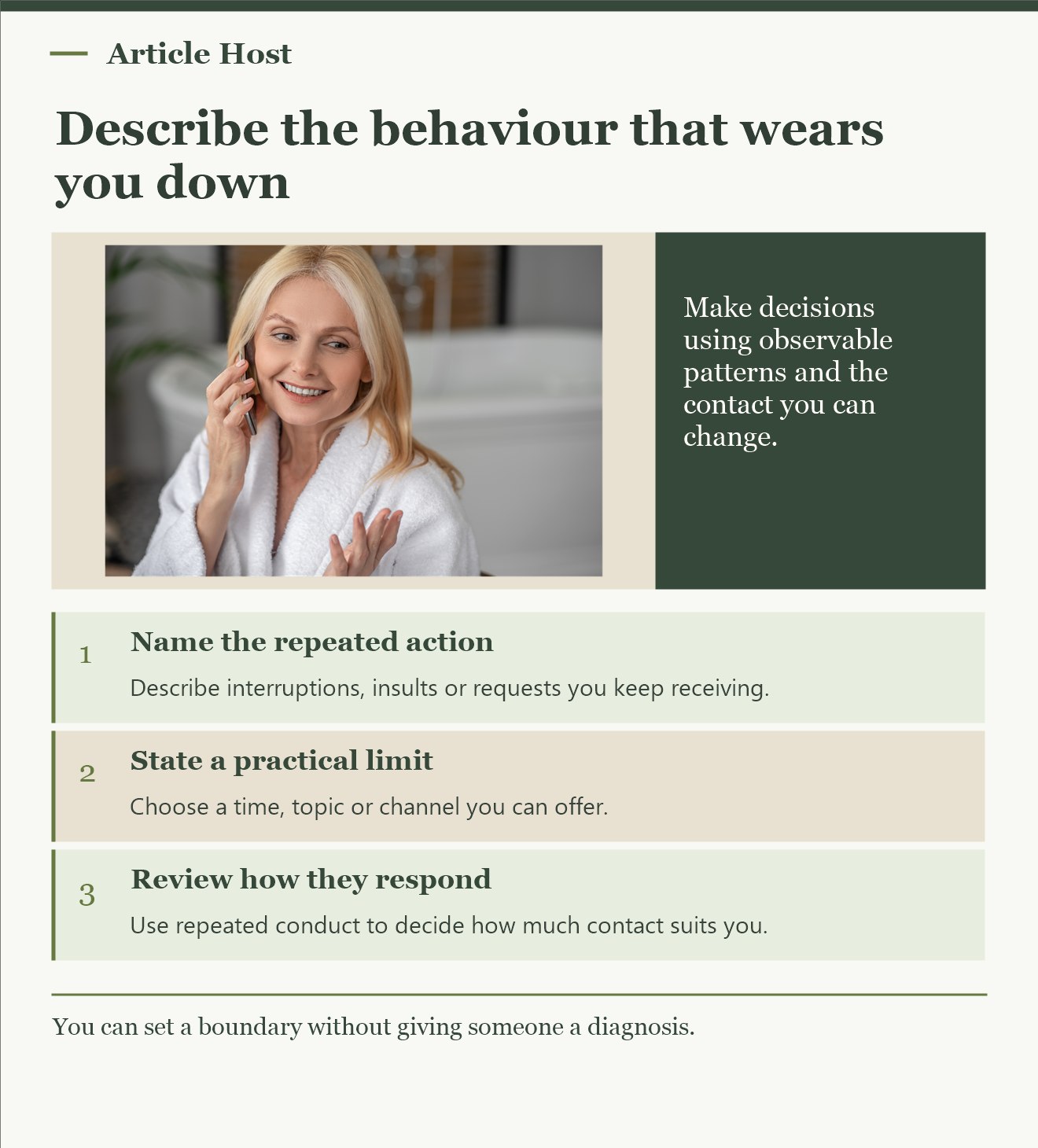
Describe the behaviour that wears you down
Make decisions using observable patterns and the contact you can change.
- Name the repeated action Describe interruptions, insults or requests you keep receiving.
- State a practical limit Choose a time, topic or channel you can offer.
- Review how they respond Use repeated conduct to decide how much contact suits you.
You can set a boundary without giving someone a diagnosis.