

Feeling emotionally drained can make ordinary tasks harder. You might notice tiredness after an argument, a tense jaw during a difficult conversation or less patience when you have had little rest. Describing these experiences can help you decide what needs attention.
People sometimes use “energy” to mean their capacity, mood or sense of connection. That language may feel useful. It does not establish that sadness or anger is a substance trapped in the body, or that an energy treatment can remove the cause of distress.
In this article
Describe what you notice
Start with something specific: “I feel disappointed after that call,” “My shoulders feel tense,” or “I am struggling to concentrate.” You do not have to identify a perfect emotion word. “I feel unsettled and need a moment” can be enough.
Keep an observation separate from an explanation. Feeling a tight chest during worry does not prove that grief is lodged there. Physical symptoms can have different causes. New, severe or concerning symptoms deserve medical attention; do not assume they are simply emotional or delay urgent care to try a calming exercise.
The NHS information on anxiety describes physical and emotional symptoms and advises against self-diagnosing. You can tell a healthcare professional what you notice without deciding the cause first.
Look at the demands around you
Ask what has happened recently and what you are carrying today. A long commute, an unresolved disagreement, caring responsibilities, pain or uncertainty about work may all deserve attention. An exhausting schedule does not become manageable just because you describe your feelings more positively.
If writing helps, use three short lines: what happened, what you noticed and what might help. For example: “The appointment changed. I feel frustrated and rushed. I need to rearrange transport.” You can leave the entry there rather than analysing every reaction.
Look for a practical pressure you can change, share or postpone. Perhaps someone else can make a call, a deadline needs renegotiating or a plan can be simplified. Where the pressure is outside your control, company, information or advocacy may be more useful than another self-care task.

Choose a manageable response
Match the next step to the need and to what is available. If you have missed lunch, arranging food may matter. If a conversation is becoming overwhelming, you might ask to pause and agree when to return to it. If you want to talk, check whether the other person has time to listen.
- Choose one immediate need, such as rest, information, privacy or help with a task.
- Pick an action small enough for the time and capacity you have.
- Afterwards, notice whether anything became easier and adjust if needed.
These are options, not a test. Sitting quietly may suit one person; another may prefer a familiar activity or gentle movement that is comfortable for them. You do not need to push through pain, force deep breathing or keep using an exercise that makes you feel worse.
For example, after a tense visit you might put away your things, have a drink and decide whether to call a friend later. There is no requirement to resolve the relationship or understand your whole emotional history that evening.
Make room for meaning without a promise
Prayer, spiritual reflection or a personal ritual may be meaningful to you. You can value that experience while also addressing sleep, money, health or relationship difficulties in practical ways. Feeling comforted does not by itself show that a treatment has removed trauma or corrected an invisible blockage.
For a specific example, NCCIH’s overview of Reiki says that its proposed energy field lacks scientific support and that effectiveness for health purposes has not been clearly established. That evidence limit matters when someone makes a healing claim.
Before paying for a practice, ask what is offered, what it costs and whether you can decline further sessions. Be cautious about pressure to buy repeated treatments to prevent harm or fix a supposed defect in you. A practice you find meaningful should not require giving up necessary healthcare or your freedom to say no.
Find support when you need more
You can ask for a specific kind of help: “Could you listen for ten minutes?” or “Can you help me arrange this appointment?” Another person may not be available, but the need remains worth addressing. Consider another trusted person, community resource or qualified professional.
If distress, fatigue or physical symptoms persist or interfere with daily life, seek appropriate healthcare support. You do not need to wait until you are unable to cope. A professional can help explore what is happening without treating every difficulty as a failure to release emotions.
Emotional Resilience: Practical Support for Difficult Days explores realistic adjustments. For asking to be heard, read Talking About Stress: Listening, Consent and Useful Support.
You can take your feelings seriously without solving them all today. An honest description, one workable adjustment and support when needed offer a useful place to begin.
What changes after a high-demand morning?
Imagine feeling drained late in the morning after three calls and a skipped break. On another similarly busy day, try one change you can arrange, such as stepping outside for lunch or scheduling one call later. Note what happened alongside sleep and how you felt entering the day.
If the difference is inconsistent, leave the cause open. Bring a short record to a clinician if fatigue persists, changes suddenly or makes normal activities hard.
Read the infographic in text
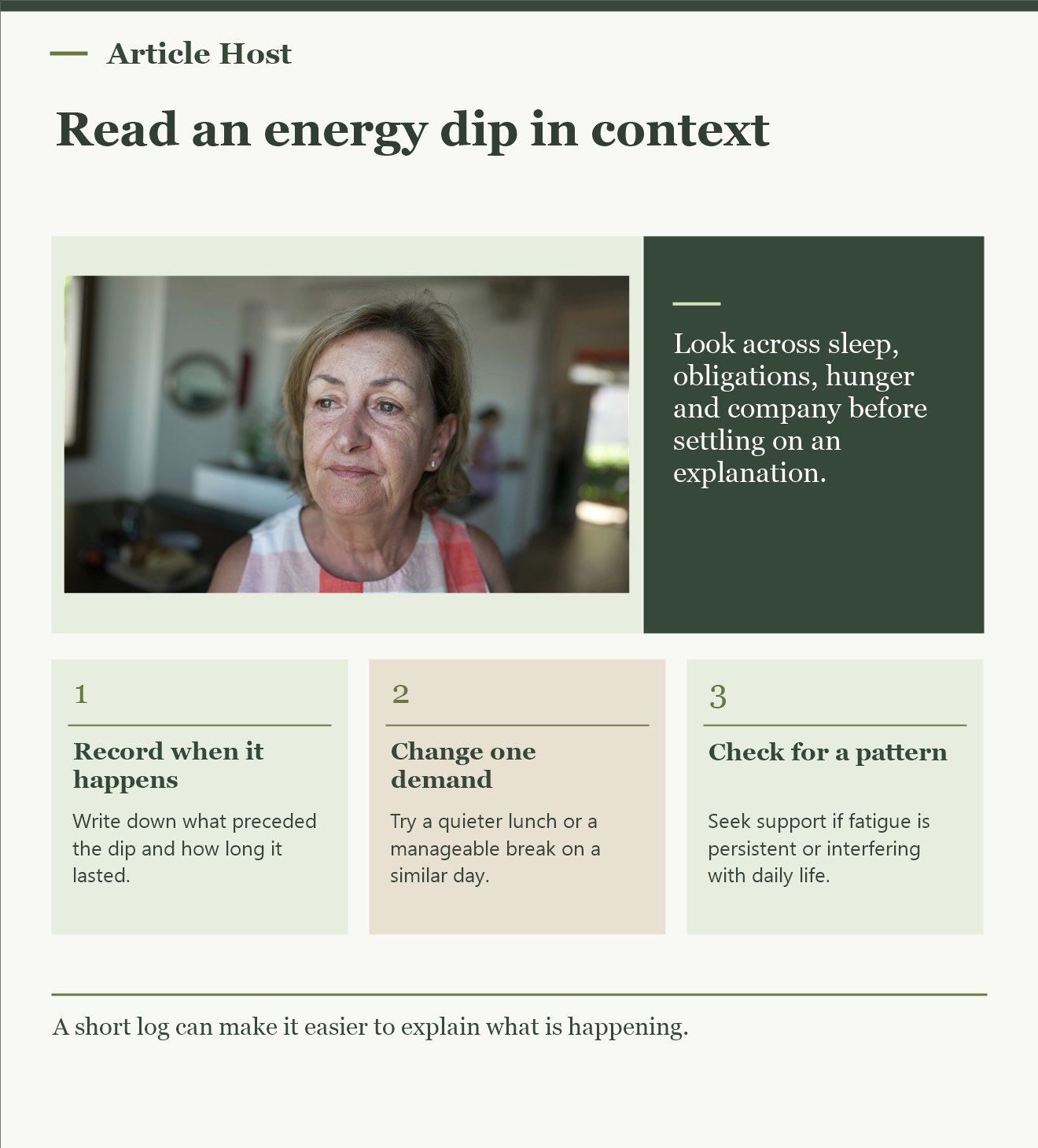
Read an energy dip in context
Look across sleep, obligations, hunger and company before settling on an explanation.
- Record when it happens Write down what preceded the dip and how long it lasted.
- Change one demand Try a quieter lunch or a manageable break on a similar day.
- Check for a pattern Seek support if fatigue is persistent or interfering with daily life.
A short log can make it easier to explain what is happening.