

When a mistake affects someone else, start with what happened and what you can do about it now. If the mistake is still causing harm, deal with the immediate problem first. For example, stop using an incorrect file or tell the people relying on a wrong deadline.
Own the mistake and its effect
Use one sentence to say what you did. “I sent the earlier version of the invoice, which had the wrong amount” gives people something clear to respond to. Acknowledge the effect you know about and ask what else needs attention. If you need to explain how it happened, keep the explanation brief.

Apologize and offer a repair
- Say what you’re sorry for. “I’m sorry I gave you the wrong figure and took up your time.”
- Offer a change you can make. “I’ll send the corrected invoice today and check that anyone using the earlier copy gets the update.”
- Give the other person time. They can tell you what would help, think about it or choose how much contact they want.
- Follow through. Do what you promised and report back when the other person is relying on the result.
Change the step that let the mistake happen
Find the point where an extra check would help. You might confirm names before sending an email, add one person to a review or set a reminder before a shared deadline. For an interpersonal mistake, the change may be giving someone time to speak or checking before repeating a private story. Take care of the part you control even if the other person needs more time.
Draft an apology after sharing something private
Suppose you repeated a friend’s news before they were ready. You could say, “I told Sam about your move. You wanted to tell them yourself, and I took that choice away.” Explain exactly whom you told and ask whether they want you to take any practical step.
They may want time or privacy. Ask before sending more messages on their behalf, and keep other people’s news private until you have explicit permission to share it.
Read the infographic in text
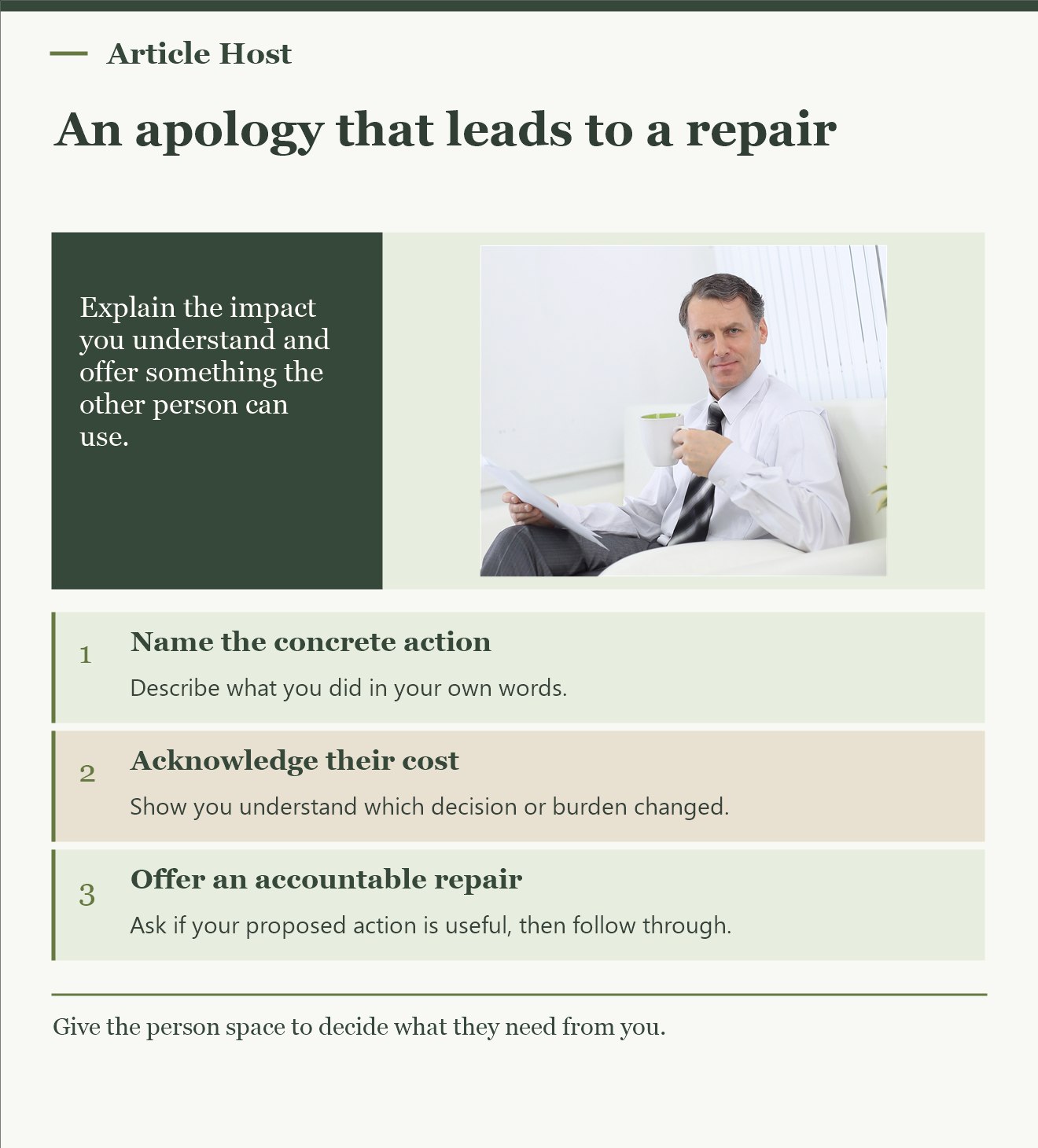
An apology that leads to a repair
Explain the impact you understand and offer something the other person can use.
- Name the concrete action Describe what you did in your own words.
- Acknowledge their cost Show you understand which decision or burden changed.
- Offer an accountable repair Ask if your proposed action is useful, then follow through.
Give the person space to decide what they need from you.