

The law of attraction is a spiritual self-help belief that the thoughts, emotions or intentions you focus on can draw related experiences into your life. Some people use words such as “alignment,” “energy” or “frequency” to express that idea. Those terms have personal or spiritual meanings in this context.
What can change when you set an intention?
An intention can help you notice something you care about and make a different choice. For instance, if you want more time with friends, you could invite one person for a walk or join a group that meets regularly. Those actions create opportunities you can follow and evaluate.
Other people’s decisions, available resources and chance matter too. Scientific evidence would be needed to show that changing a thought directly controls outside events. Accounts of success can be meaningful to the people sharing them, and those accounts leave open how the outcome came about.

How to use the idea without carrying extra blame
Choose a wish that reflects your values, then identify one action within reach and one thing you cannot control. If a result does not arrive, see whether you have new information about the plan. You can keep the practice as reflection and still make decisions about money, health and relationships based on available information and professional advice where appropriate.
A clear definition and a practical distinction
The law of attraction is a spiritual self-help belief that thoughts or feelings can draw corresponding experiences. Some people use it as a framework for reflection and hope. Scientific claims about health, wealth or another person’s choices need evidence beyond personal examples.
If you set an intention to meet new people and later join a class, you can observe the step that created an opportunity for contact. Enjoy the meaning you give the experience while leaving room for chance, other people’s decisions and circumstances outside your control.
Read the infographic in text
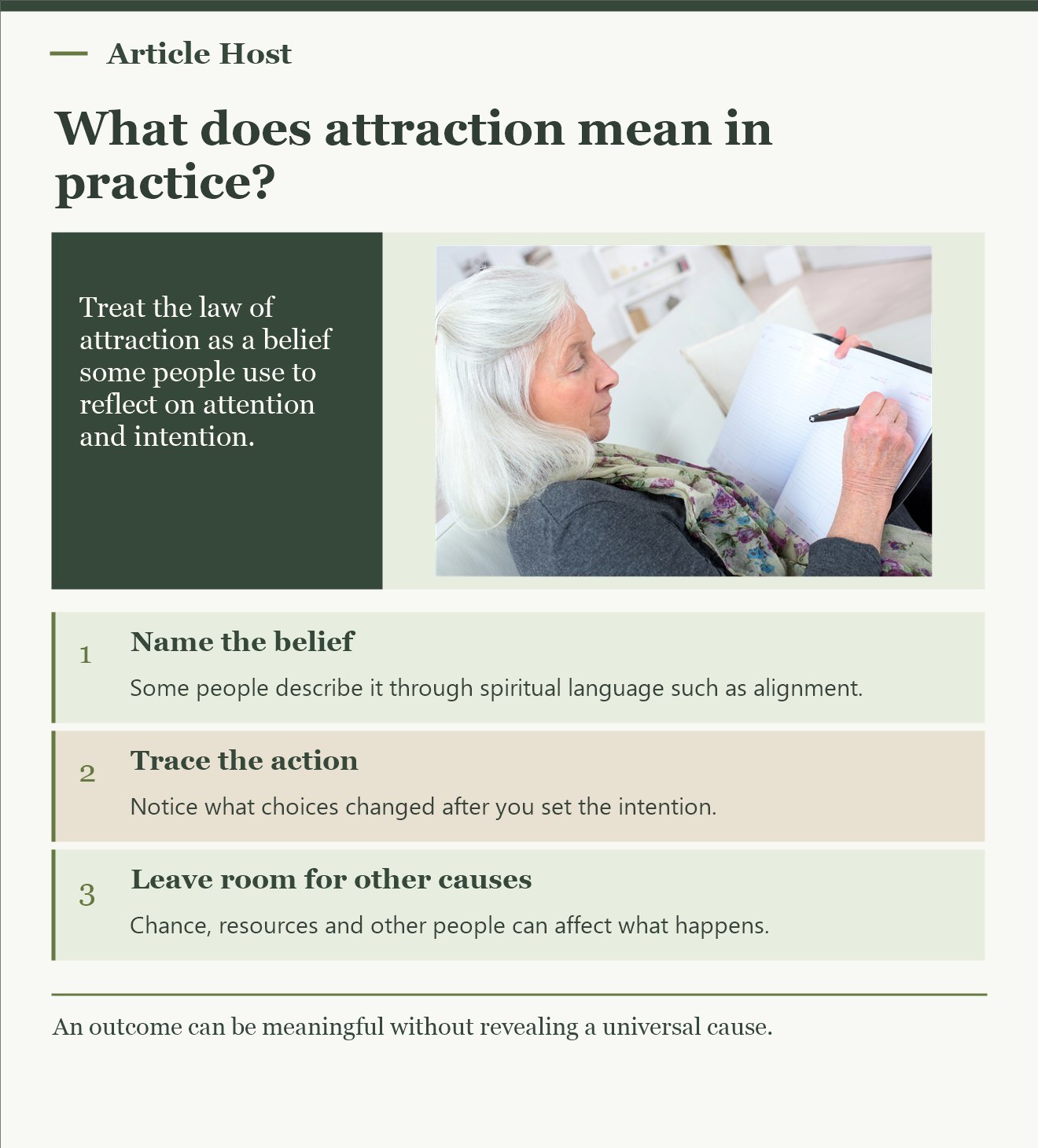
What does attraction mean in practice?
Treat the law of attraction as a belief some people use to reflect on attention and intention.
- Name the belief Some people describe it through spiritual language such as alignment.
- Trace the action Notice what choices changed after you set the intention.
- Leave room for other causes Chance, resources and other people can affect what happens.
An outcome can be meaningful without revealing a universal cause.