

“Toxic” can describe a lot of behaviour. If you’re deciding how to respond, start by naming what happened. A colleague interrupted you three times, a friend mocked your body in front of others or a partner kept demanding your passwords after you said no.
Look at how the person responds to a limit
An interruption can be addressed with “I’d like to finish what I was saying.” Repeated humiliation, threats or retaliation need a different response. Notice whether they listen, change the behaviour or make it harder for you to speak up next time.
Take pressure and control seriously
Someone may insult you, monitor your messages or insist you imagined events you remember clearly. If you fear their reaction, you can seek private support before raising the issue. The National Domestic Violence Hotline’s safety planning resources can help you think through options.

Choose a next step you can carry out
You might leave a conversation, restrict contact to work topics or write down specific incidents for a manager or trusted person. If there’s immediate danger, contact your local emergency services. See also recognising verbal abuse.
Consider what happens after a reasonable limit
A neighbour keeps asking you to do favours after you say you are unavailable. If it is safe, say, “I’m available to help once on Saturday. I’m unavailable on weeknights.” When they press on Tuesday, let that request go unanswered until your usual time to reply.
If the pressure includes threats, monitoring or punishment, consider support and safety planning. You can make decisions about contact based on the behaviour you’ve observed.
Read the infographic in text
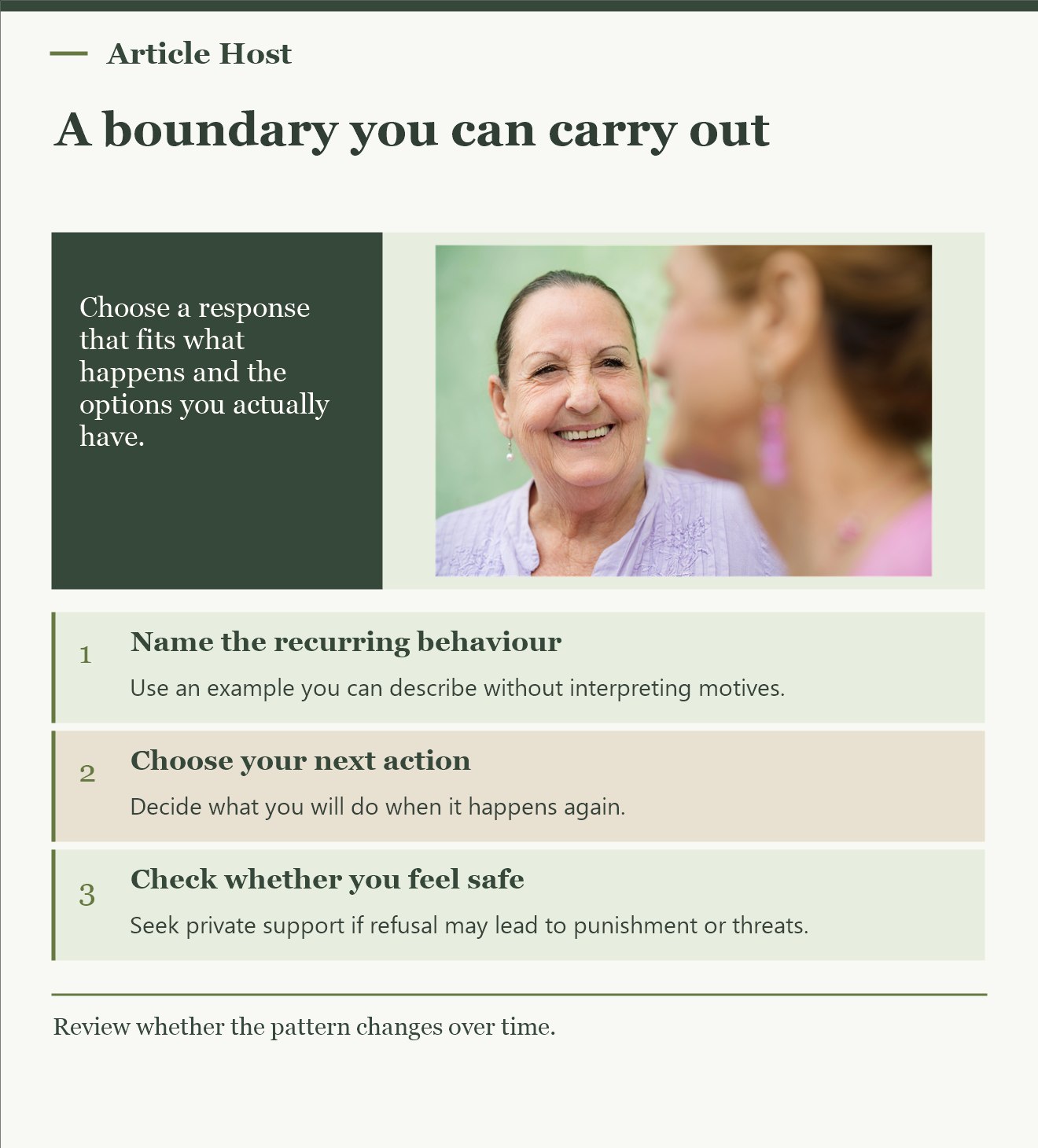
A boundary you can carry out
Choose a response that fits what happens and the options you actually have.
- Name the recurring behaviour Use an example you can describe without interpreting motives.
- Choose your next action Decide what you will do when it happens again.
- Check whether you feel safe Seek private support if refusal may lead to punishment or threats.
Review whether the pattern changes over time.