

If a mistake is still causing a problem, address that first. Correct the information, contact anyone who is relying on it or ask someone with the right authority to help. Once the immediate issue is handled, take a moment to understand what led to it.

Write down what happened
Separate what you know from what you’re guessing. For example, “I sent the wrong file because the drafts had almost identical names” gives you a specific situation to work with. Consider who had to spend extra time, change a plan or make a decision with the wrong information.
Make one repair and one preventive change
- Offer a repair. Tell the affected person what you can fix and when. Give them a chance to tell you what else they need.
- Check the point where the mistake happened. Were the instructions unclear, did you skip a step or were you rushing because the deadline was unrealistic?
- Choose a change you can test. Rename drafts clearly, ask for written confirmation or add a short review before sending something important.
Use regret to guide your next action
When the moment keeps coming back to you, ask whether there’s anything left to do. If you still owe someone an update, put it on your calendar. If you’ve made the repair and changed the process, give yourself time to practice it. Share the lesson with colleagues when it would help them, leaving out private details.
Correct a mistake that could disrupt someone else’s day
You send a volunteer group the wrong arrival time. Contact the people involved as soon as you spot it, put the correct time first, and ask the coordinator to update the calendar. If someone already arranged transport, ask what would help them adapt.
After the event, find where the mistake started. A single calendar entry maintained by the coordinator may do more to prevent a repeat than an extra reminder to be careful.
Read the infographic in text
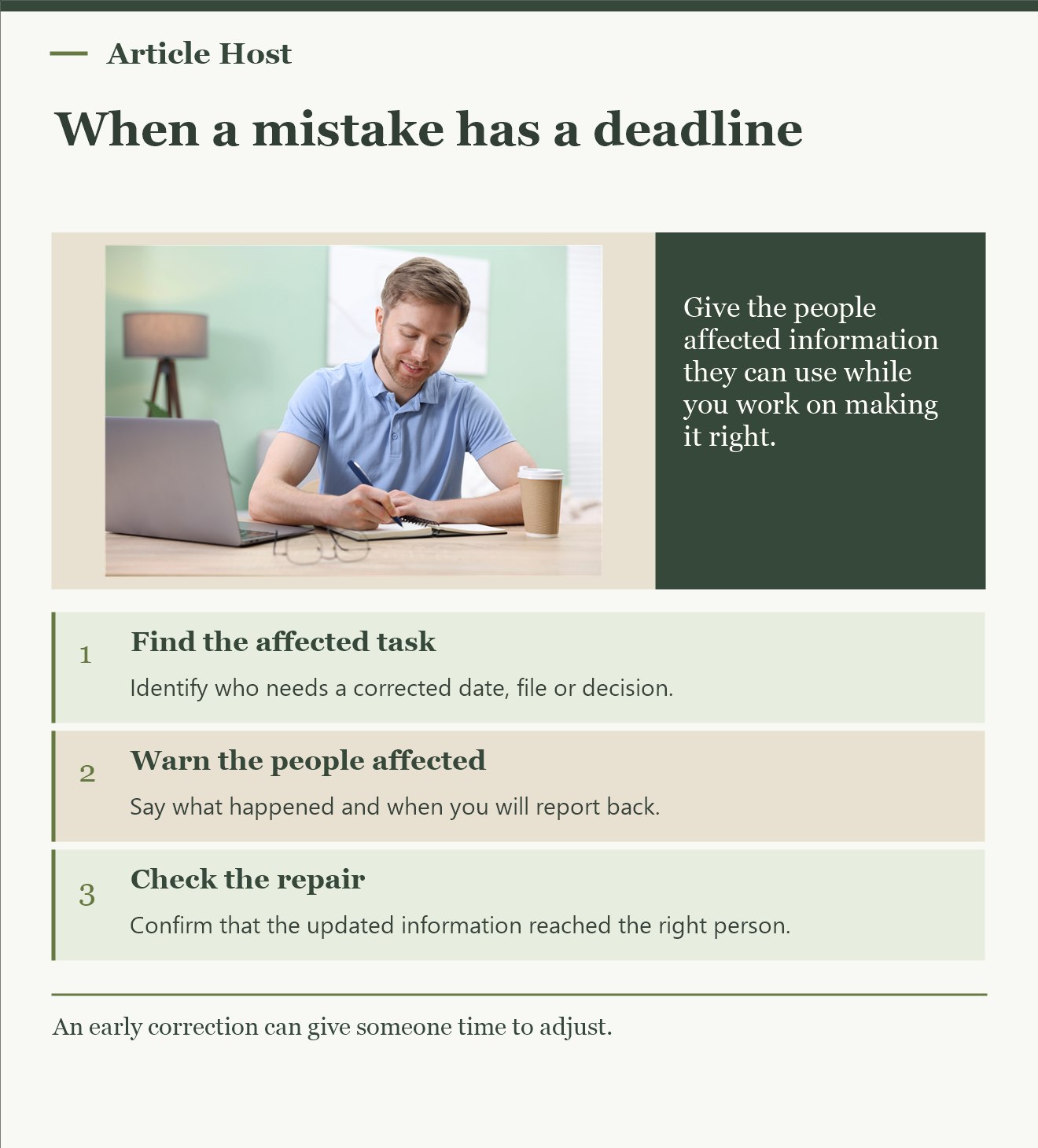
When a mistake has a deadline
Give the people affected information they can use while you work on making it right.
- Find the affected task Identify who needs a corrected date, file or decision.
- Warn the people affected Say what happened and when you will report back.
- Check the repair Confirm that the updated information reached the right person.
An early correction can give someone time to adjust.