

You can take part in a conversation while feeling unsure. Confidence does not require a commanding posture, constant eye contact or perfectly still hands. A more useful starting point is knowing what you want to communicate and finding a comfortable way to do it.
Whether you are meeting someone new, speaking at work or asking for help, aim for a manageable interaction rather than a performance. You do not have to hide every sign of nerves to be worth listening to.
In this article
1. Prepare one point
Ask what you want from the interaction. You might want to introduce yourself, ask a question or explain a concern. Write a short opening if it helps: “I would like to ask about the deadline” or “I am new here. How does this usually work?”
Keep a few notes available rather than trying to memorise every possible exchange. For an appointment or meeting, check the practical details beforehand so you have less to work out on arrival.
2. Choose comfort over a pose
Sit, stand or use mobility supports in a way that is comfortable for you. There is no need to stretch into a power pose, take larger steps or hold your body rigidly to prove confidence.
Choose an amount of eye contact that suits you. Communication preferences differ, and some people find eye contact uncomfortable. The National Autistic Society’s communication guidance explains a range of differences and support needs. A person can listen carefully without looking directly into someone’s eyes.
Moving your hands, looking away or using a fidget aid does not need to become another thing to criticise about yourself. Respect other people’s personal space; touch is not a technique for appearing confident.
3. Make your message clear
Use words that describe what you need. “Could you explain that last step?” is more useful than trying to look as though you already understand. You can ask for extra time, written instructions, a quieter place or a different communication format.
Pause when you need to gather your thoughts. If you speak, aim for a pace and volume that work for the situation without forcing your voice. Writing, signing or using a communication aid are also valid ways to participate.
Check understanding when it matters: “Have I explained that clearly?” or “Let me check that I have understood.” You can be direct and considerate at the same time.

4. Practise in small steps
Choose a low-pressure opportunity, such as asking a familiar person a question or rehearsing an introduction with someone you trust. Make the step smaller if it feels overwhelming. You can practise a skill while keeping the support you need.
If you want feedback, ask about one specific thing: “Was my request clear?” This is easier to use than asking someone to judge how confident you looked. A difficult interaction does not establish how the next one will go.
5. Review with kindness
Afterwards, note one thing you managed and one adjustment for next time. Avoid treating another person’s reaction as a complete measure of your ability or worth. Sometimes the environment or the way you were treated needs to change too.
If fear of social situations repeatedly disrupts everyday life, speak with a qualified professional. The NHS information on social anxiety and support explains when to seek help. You do not need to solve persistent anxiety by changing your posture.
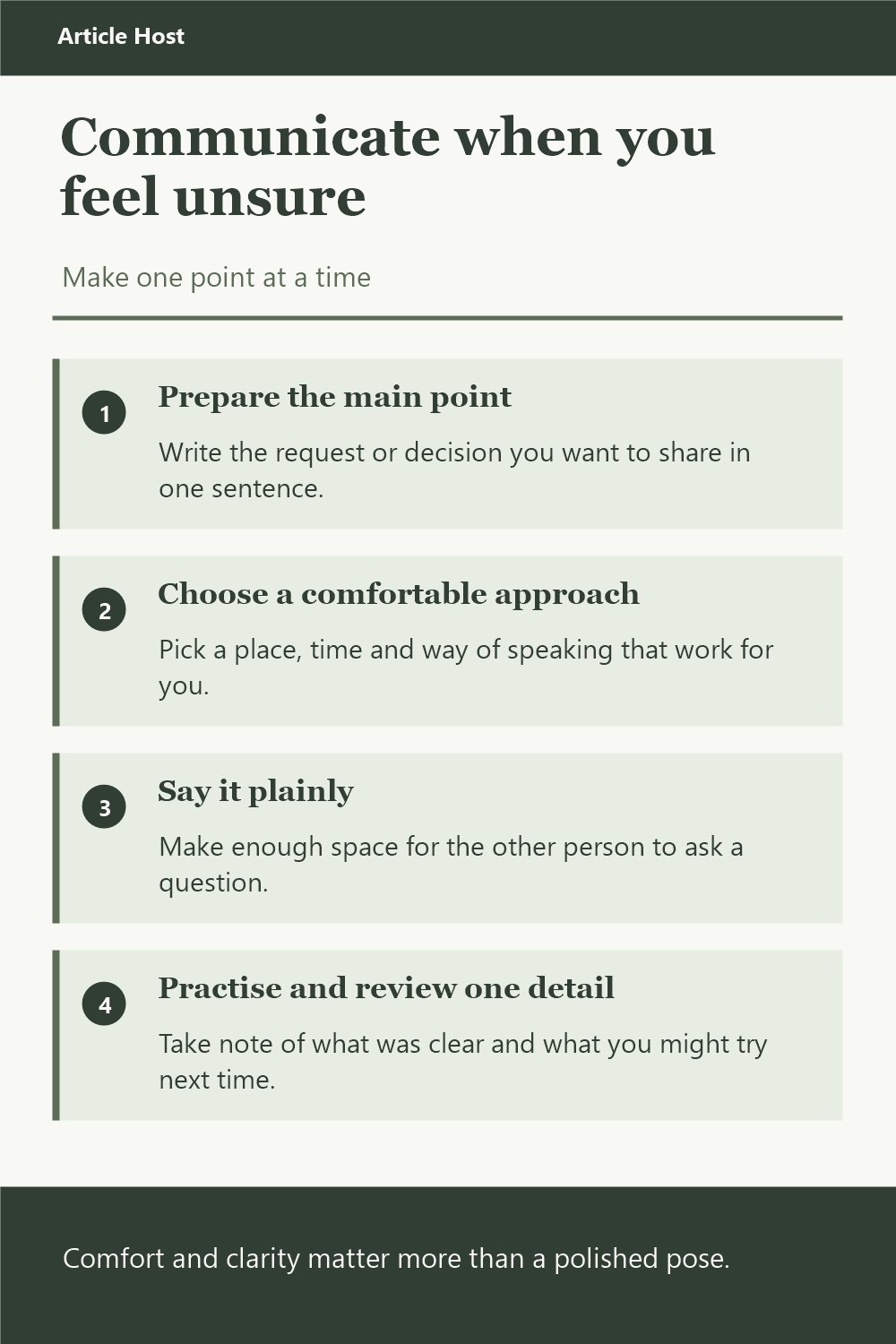
Read the infographic in text
Communicate when you feel unsure
Make one point at a time
- Prepare the main point Write the request or decision you want to share in one sentence.
- Choose a comfortable approach Pick a place, time and way of speaking that work for you.
- Say it plainly Make enough space for the other person to ask a question.
- Practise and review one detail Take note of what was clear and what you might try next time.
Comfort and clarity matter more than a polished pose.