

“Reconnecting with your soul” may be a meaningful way to describe wanting a closer relationship with your values, faith, creativity or sense of self. You might use that language after a loss, a demanding period or a change that has left life feeling unfamiliar.
You do not have to decide that part of you is missing or damaged before taking that feeling seriously. Start by asking what connection would look like in your everyday life, and choose an approach that feels voluntary and manageable.
On this page
Name what feels distant
Try finishing one sentence: “I miss the part of my life where I could…” Perhaps you miss making art, practising your faith, spending time with someone you trust or having enough quiet to hear your own preferences.
Then separate the feeling from the circumstances around it. For example, “I no longer care about anything” might sit beside “I have been working extra shifts and have had little time to rest.” This does not settle the cause of how you feel. It gives you something concrete to discuss or change.
If journaling suits you, use a short prompt rather than searching for a hidden explanation: “What mattered to me today?” or “When did I feel most like myself?” You can leave the answer unfinished. You do not need to uncover forgotten memories to make the exercise worthwhile.

Choose a gentle practice
A spiritual practice can be personal and simple. Depending on your beliefs, you might choose prayer, a familiar reading, time outdoors, music, a creative activity or a conversation within a trusted community. You can also choose an entirely secular form of reflection.
Set a small boundary around it. You might listen to one song, draw for ten minutes or sit somewhere comfortable and notice what is around you. Ask afterwards whether it felt settling, meaningful, uncomfortable or simply neutral. That observation can guide your next choice.
You can stop a practice that feels overwhelming. Avoid pushing yourself through distress because someone says it proves that a spiritual breakthrough is near. If focusing inward is uncomfortable, an ordinary external activity, such as preparing food or speaking with a trusted person, may be a more workable choice for now.
Keep spiritual meaning and healthcare distinct
“Soul loss” is spiritual language, not a medical diagnosis. It should not be used to explain away depression, memory problems or other symptoms, and it is not another name for dissociation.
The NHS describes dissociative disorders as conditions that can involve disconnection or significant memory gaps and that require appropriate assessment. A checklist on a spiritual website cannot establish whether you have one. If you are experiencing persistent numbness, feeling unreal, unexplained gaps in memory or difficulty managing daily life, speak with a qualified healthcare professional about what is happening.
You can describe both the symptoms and the spiritual meaning they hold for you. Seeking care does not require you to give up a belief that matters to you. Nor does a difficult experience prove that you failed to think positively, control your ego or protect your energy.
Find support without pressure
You might want a trusted friend, a faith leader, a spiritual mentor or a mental health professional to talk with. Consider what you want from the conversation: company, help with a practical problem, space to explore beliefs or assessment of symptoms.
Ask about the person’s role, fees and limits before committing. Be cautious if someone insists that only they can restore you, demands secrecy, predicts harm unless you pay or tells you to stop prescribed care. You can decline a service or seek another opinion without accepting their interpretation of your experience.
If discussing the past becomes distressing, you can say: “I would rather focus on what helps me feel safe and supported now.” You do not owe anyone a detailed account of a painful event to receive respect.
Make one small return
Choose one part of life you would like to have more room for this week. Make the next action modest: find your sketchbook, send a message to someone you trust or check the time of a community gathering you would like to attend.
Afterwards, ask whether the step suited your needs and what you would change. You are allowed to explore meaning without promising yourself a transformation. Connection can be something you make room for in ordinary life, with support when you need it.
Start with something short from a practice you value
If longer meditation feels hard lately, try a short walk where you notice sound or light and give yourself a moment to reflect. If you miss a community, consider one low-pressure gathering or a conversation with someone you trust.
Write down how you felt afterwards and what you might try again. If distress, sleep problems or difficulty with daily tasks continues, seek appropriate healthcare alongside any spiritual support you choose.
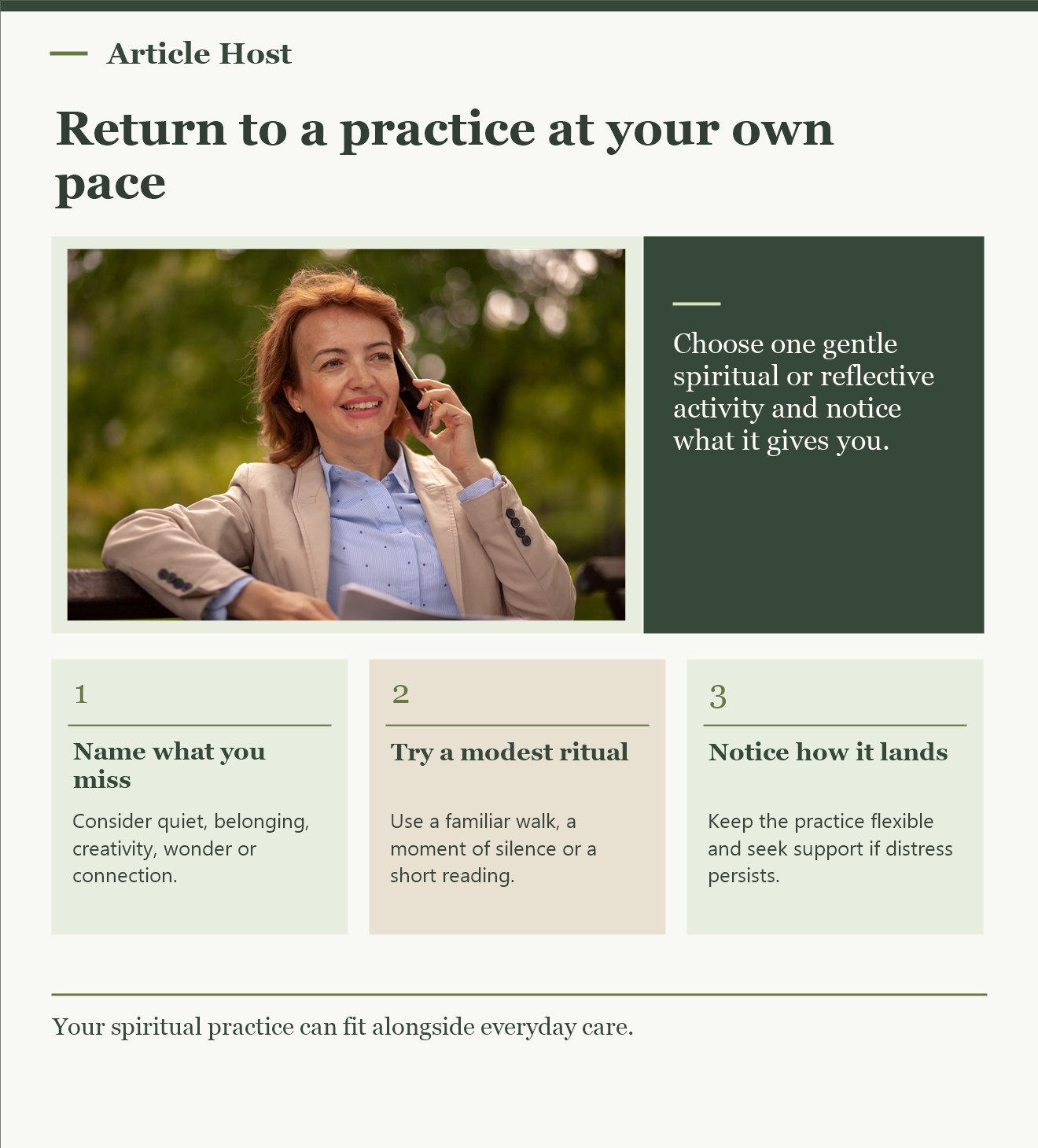
Read the infographic in text
Return to a practice at your own pace
Choose one gentle spiritual or reflective activity and notice what it gives you.
- Name what you miss Consider quiet, belonging, creativity, wonder or connection.
- Try a modest ritual Use a familiar walk, a moment of silence or a short reading.
- Notice how it lands Keep the practice flexible and seek support if distress persists.
Your spiritual practice can fit alongside everyday care.