
Love questions can feel urgent when you want reassurance about a new connection or a difficult relationship. Tarot may be meaningful to you as a spiritual practice, a way to explore images or a prompt for reflection. A useful reading leaves you with something you can consider or do, while keeping another person’s choices their own.
These twelve card prompts focus on your needs, conversations and everyday actions. They are examples, rather than a special set of cards that guarantees love. You can use one question without drawing another card until you receive an answer you prefer.
On this page
1. Major Arcana: consider the wider question
Named cards such as the Lovers and the Hierophant appear among the Major Arcana. Historical interpretations are varied: A. E. Waite’s guide, for example, connects them with attraction and marriage. A symbolic association does not establish what will happen in your relationship. Try turning the theme into a question you can answer from your own life.
The Lovers: choices and mutual interest
Ask: “What kind of relationship am I choosing, and is the interest mutual?” Notice what you know from actual conversations and behaviour. Feeling strongly about someone does not settle whether they want the same connection. If it is safe and appropriate, a clear invitation can be more useful than trying to infer a hidden yes.
The Empress: care with room for yourself
Use this card to consider how care works in your life. “What helps me feel supported, and what am I able to offer?” might lead to a request for shared tasks or more time for rest. Caring for another person does not require giving up every need of your own.
The Hierophant: commitment and shared values
Ask what commitment means to you before assuming a partner shares the definition. Marriage, exclusivity, shared housing and involvement with family are different decisions. “Which agreement matters to us now?” gives you a starting point. A card cannot make an engagement or another person’s agreement inevitable.
The Sun: enjoyment without a promised outcome
Consider: “When do I feel at ease with this person, and what would we like to enjoy together?” Keep the answer ordinary: a walk, a meal or an activity you both want. A happy image does not require you to ignore a difficulty.
The Sun cannot confirm a pregnancy. If that is the question, follow appropriate pregnancy-testing guidance and seek healthcare advice when needed. Keep a health decision separate from a symbolic reading.
2. Cups: reflect on connection and care
Waite’s descriptions of Cups include themes of affection, invitations and contentment. You can explore those ideas without treating a card as evidence of someone else’s feelings. Ask what connection looks like in practice and which parts need a conversation.
Two of Cups: listen as well as ask
Try: “What do I want to understand, and what would I like to explain?” Choose one concern rather than attempting to settle the whole relationship at once. If your partner gives an answer you did not hope for, allow that answer to inform your choice.
Ten of Cups: define a life that suits you
Ask what a supportive home or community would mean to you. It might involve a partner, friends, relatives or chosen family. A conventional picture of happiness does not have to become your personal requirement. Consider who helps you feel welcome and what contact you would like to maintain.
Knight of Cups: distinguish an invitation from a promise
A romantic message may be enjoyable without telling you how a relationship will develop. Ask: “What has actually been offered, and do I want to accept?” You can show interest, ask for clarity or decline. Nobody needs to earn affection by agreeing to more than they want.
3. Wands: connect interest with a considered action
In Waite’s account, the selected Wands cards include beginnings, celebration and recognition. Use those themes to consider an action you can choose, while checking its timing and whether other people want to participate.
Ace of Wands: express interest without pressure
Ask: “What would I enjoy trying, and how can I invite rather than insist?” That might mean proposing a date or discussing affection. Leave room for a clear no, a different idea or a change of mind. Attraction and enthusiasm do not create an obligation to have sex.
Four of Wands: notice what you can celebrate
You might appreciate a shared achievement, an enjoyable evening or an anniversary. Ask what feels worth marking to both of you. A celebration can be small and affordable. You do not need to turn the card into a prediction of marriage or rush a milestone to fit an interpretation.
Six of Wands: look beyond outside approval
Try: “Am I choosing something because it matters to me, or because I want the relationship to look successful?” Praise, social-media attention or other people’s approval cannot settle how you are treated privately. Make room to notice both what is working and what needs to change.
4. Pentacles: consider everyday support
Family, resources and security feature in Waite’s descriptions of the two Pentacles cards below. Translate those broad themes into practical questions. Security in a relationship involves actual arrangements; it cannot be established by drawing a particular card.
Ten of Pentacles: discuss the arrangements
Ask: “Which shared responsibility needs a clearer agreement?” You may need to discuss housing, household tasks, money or contact with relatives. Do not assume that a promise of a future together settles the details. Write down the agreement if that would help both people understand it.
Queen of Pentacles: make support specific
Consider what would make the coming week more manageable. Would you like help with a task, time alone or someone to listen? Ask for that directly where it feels safe. You can be generous while respecting your own capacity, and you can seek support beyond a partner.
5. Swords: leave room for a difficult question
A love reading does not need to exclude Swords or contain only comforting images. If a card brings up worry, separate the thought from what you can establish. “I am afraid they are hiding something” is different from knowing that they are. Do not turn an interpretation into an accusation, a secret phone check or a reason to ignore clear evidence of harm.
6. Court cards: avoid assigning a person a role
A court card can suggest a quality you want to explore without identifying a future partner or revealing someone’s personality. Avoid deciding that a person must behave a certain way because of a card, gender, appearance or zodiac sign. Ask about the individual and the relationship you actually have.
7. Choose one practical next step
- Name one reflection. Write a sentence about what you noticed, rather than a prediction about another person.
- Separate knowledge from interpretation. Note what someone has said or done and which part remains uncertain.
- Choose an action you control. Ask a question, make a clear invitation, set a limit or seek support.
For help turning a broad intention into something workable, read choosing practical goals without demanding perfection. If the reading has become a judgment about whether you are lovable, our guide to building self-esteem and treating yourself fairly offers a different starting point.
You can pause a reading that leaves you more distressed or repeatedly seeking reassurance. If a relationship involves intimidation, threats or control, seek confidential specialist support. You do not need a favourable card, a spiritual lesson or someone else’s permission before taking your safety seriously.
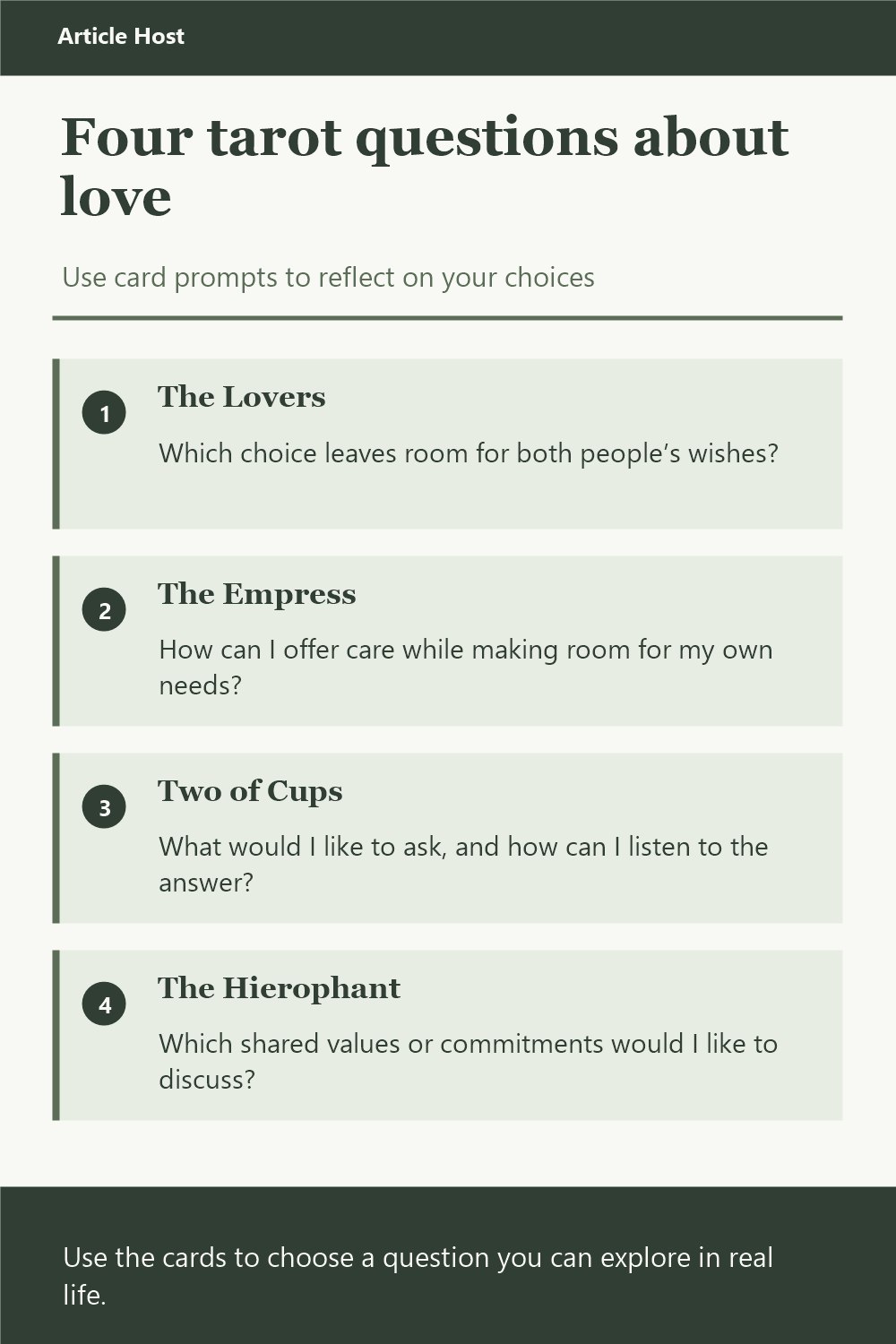
Read the infographic in text
Four tarot questions about love
Use card prompts to reflect on your choices
- The Lovers Which choice leaves room for both people’s wishes?
- The Empress How can I offer care while making room for my own needs?
- Two of Cups What would I like to ask, and how can I listen to the answer?
- The Hierophant Which shared values or commitments would I like to discuss?
Use the cards to choose a question you can explore in real life.