

Wanting connection can make it hard to express a preference, ask for rest or disagree with someone important to you. Some people call repeatedly setting aside their own needs “self-abandonment.” You do not need that label to notice when an arrangement is leaving you exhausted or unheard.
You can value a relationship and include yourself in its decisions. The goal is not to stop needing anyone, reveal every private feeling or become perfectly confident. Start with one ordinary need and a response that fits your circumstances.
On this page
Notice where your needs disappear
Look for a repeated situation rather than scoring your whole personality. Perhaps you always say “anything is fine” about plans, postpone healthcare appointments to remain available or agree to a favor before checking your energy.
Compromise itself is not a problem. Ask whether your preferences can return to the conversation and whether you have a meaningful choice. Taking turns choosing a meal differs from learning that disagreement brings ridicule or punishment.
Try a brief check-in: What do I notice? What would help? What can I realistically change today? You might need sleep, food, company, quiet or clearer information rather than a major life decision.
Understand the context without judging yourself
People hold back for many reasons, including habit, uncertainty, cultural expectations, practical dependence or fear of another person’s response. These examples do not prove that you had a particular childhood or have a mental-health condition.
It may once have been safer to keep a preference private. You can recognize that choice without criticizing yourself for not speaking sooner. If expressing a need still creates danger, support and safety planning matter more than a confidence exercise.
Nor do you have to earn love by becoming completely healed or self-sufficient. Relationships can include imperfect people learning to ask, listen and make changes. Another person’s mistreatment is their responsibility.

Turn a need into a manageable request
Translate a broad feeling into something another person can understand. “I need more consideration” might become “Please ask before inviting people over on the evening I work late.” A clear request gives you something concrete to discuss.
- Pause before agreeing, if you can: “Let me check and get back to you.”
- Name one need or preference without building a case for your worth.
- Offer an alternative only if you actually want to offer it.
- Notice the response and whether the agreement is followed.
Being honest does not require sharing everything. You may say, “That is private,” or choose a neutral answer in a situation where disclosure could put you at risk. Privacy is compatible with a close relationship.
Practice care without making it another test
Choose care that addresses the actual difficulty. If you have missed lunch while helping someone, eating may matter more than finding the perfect affirmation. If a task is too large, ask for help or reduce its scope.
A compassionate response can be factual: “I agreed too quickly. I can revise that commitment.” You might write down what you need, talk with a trusted person or make one practical arrangement. Journaling and meditation are optional tools, not requirements for being kind to yourself.
For more ideas, read about making everyday self-care workable. Pick something that fits your resources rather than adding a long routine you feel obliged to complete.
Choose boundaries, support and next steps
A request asks for cooperation; a boundary describes your own participation. “I will pause this conversation if the insults continue” is different from promising to make someone respect you. Choose actions you can safely carry out.
The National Domestic Violence Hotline’s relationship guidance includes room for privacy, disagreement and time apart. Repeated intimidation or control deserves individual support, not pressure to find a better way to please the other person.
If you fear retaliation, seek advice from an appropriate local abuse-support service before announcing changes, using a safer device if needed. If distress or difficulty caring for yourself is persistent, a qualified healthcare professional can help you assess it.
You can review one small change: Did you state a preference? Keep an appointment? Ask someone else to share a task? These practical confidence ideas may help you keep practicing. Progress can include receiving support as well as speaking up.
Read the infographic in text
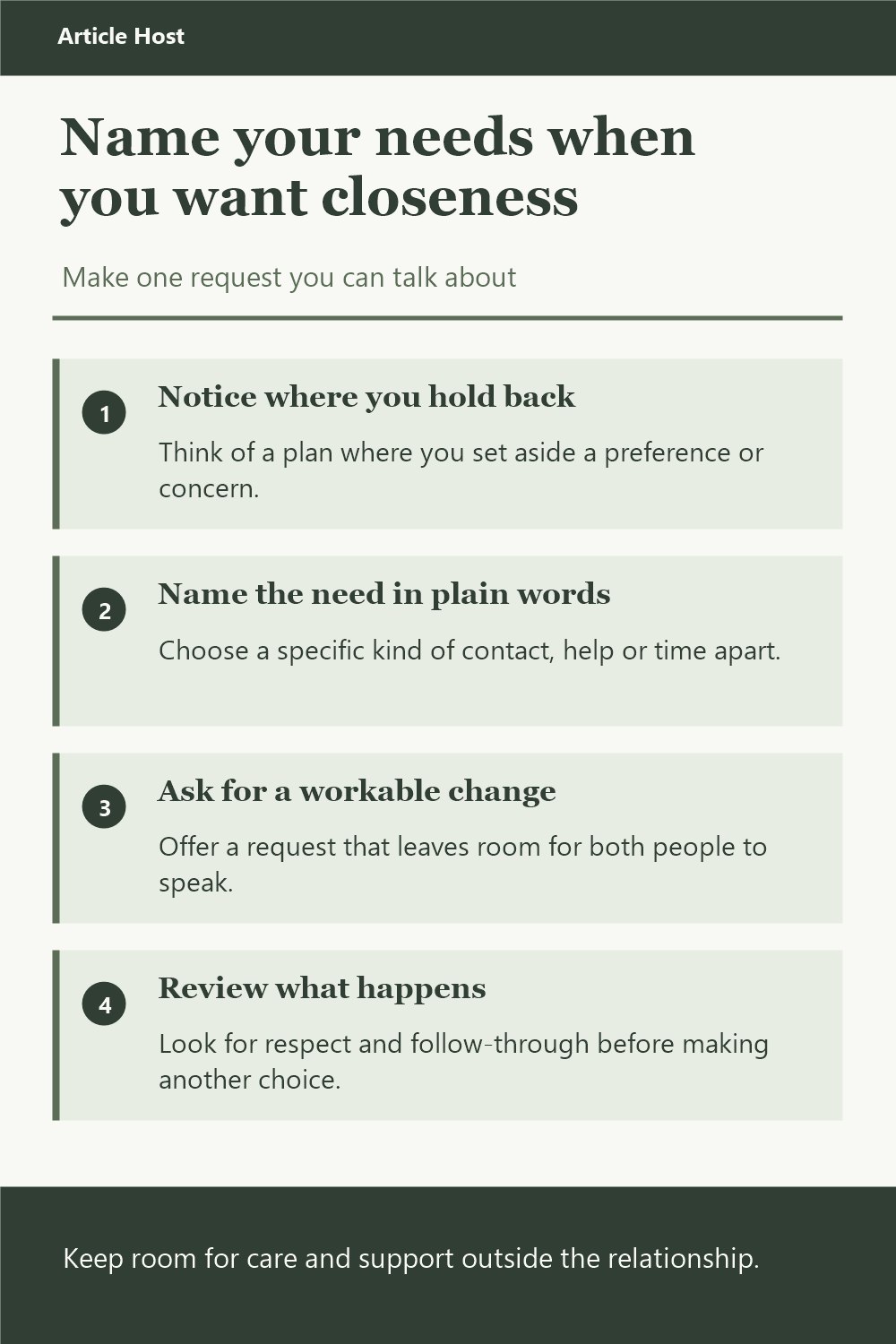
Name your needs when you want closeness
Make one request you can talk about
- Notice where you hold back Think of a plan where you set aside a preference or concern.
- Name the need in plain words Choose a specific kind of contact, help or time apart.
- Ask for a workable change Offer a request that leaves room for both people to speak.
- Review what happens Look for respect and follow-through before making another choice.
Keep room for care and support outside the relationship.