

After a loss, a frightening diagnosis, a relationship ending or another major change, life may feel unfamiliar or painfully difficult. Advice to “stay positive” can seem far away from what you are living through.
You do not have to find a lesson, feel grateful or know how the future will work out before accepting support. Start with what you need to get through the next part of the day, and leave room for feelings that do not have a tidy answer.
On this page
Allow feelings without demanding an explanation
“Why did this happen?” may be a question you return to often. Asking it does not mean that you are failing to cope. Some situations have practical explanations to investigate; others leave questions that cannot be fully answered.
You might feel sad, angry, numb, frightened or unsure what you feel. The NHS guide to grief after bereavement or loss explains that responses vary and may follow the loss of a relationship, job or home as well as a death. You do not have to move through a fixed set of stages.
Try describing the present moment without predicting your whole future: “Today is very hard,” or “I don’t know how to handle this yet.” You can acknowledge the difficulty while leaving space for help and for things you cannot see clearly right now.

Make today more manageable
Choose a few immediate needs rather than setting yourself a recovery project. Consider whether you have something to eat, necessary medication, a place to rest and help with responsibilities that cannot wait.
Sort tasks into three groups: needs attention today, can wait, and needs someone else’s help. A short list may be enough. If there are children or others depending on you, consider who can share practical care or help you arrange support.
Where possible, give yourself time before making a major decision that is not urgent. For decisions that cannot wait, ask a trusted person or an appropriate professional to help you understand the options.
A familiar activity or a brief comfortable moment may offer some relief. You do not need to turn that moment into gratitude for what happened. Make Life More Manageable: Planning, Priorities and Support offers related ideas for reducing everyday demands.
Separate responsibility from self-blame
When something painful happens, it can be tempting to replay every choice and ask what you should have done differently. Try separating what you knew then from what became clear afterwards.
Ask which decisions were yours, what was outside your control and what support or information was missing. This can help you look honestly at events without making yourself responsible for every outcome.
If there is a specific action to repair, consider what is appropriate and respectful. If someone else harmed you, recognising their responsibility does not make you negative. You may need boundaries, protection or advice. You do not have to forgive or resume contact to accept help.
If you keep circling the same painful questions, talking with a counsellor or another qualified professional may help you work through them. You do not need to decide alone whether your feelings are reasonable enough to deserve support.
Tell someone what support would help
You can ask for help without sharing every detail. Try a concrete request: “Could you bring something to eat?” “Can you sit with me for a while?” or “Would you help me write down the questions for this appointment?”
It is also reasonable to say what is unhelpful: “I don’t need a positive explanation right now,” or “Please listen before offering suggestions.” Talking About Stress: Listening, Consent and Useful Support explores ways to make those conversations more comfortable.
Some people may be unavailable or unsure how to respond. That does not settle the question of whether you deserve care. Consider another trusted person, a support group or a relevant service. Choose someone who respects your privacy and boundaries.
Find more help when you need it
If distress, worry or low mood is making daily life difficult, or the things you are trying are not helping, consider speaking with a healthcare professional. You can describe what has changed in your sleep, concentration, relationships or ability to manage ordinary tasks.
If you feel unable to keep yourself safe, contact your local emergency service or go to an emergency department now. If you can, tell someone you trust that you need immediate help. The NHS urgent mental health guide explains urgent and emergency options for readers in England.
For the next manageable step, choose one need and one source of support. That might be a meal, a call, help with an appointment or simply company. You can receive care while life still feels difficult; you do not have to perform confidence or promise that everything will soon be better.
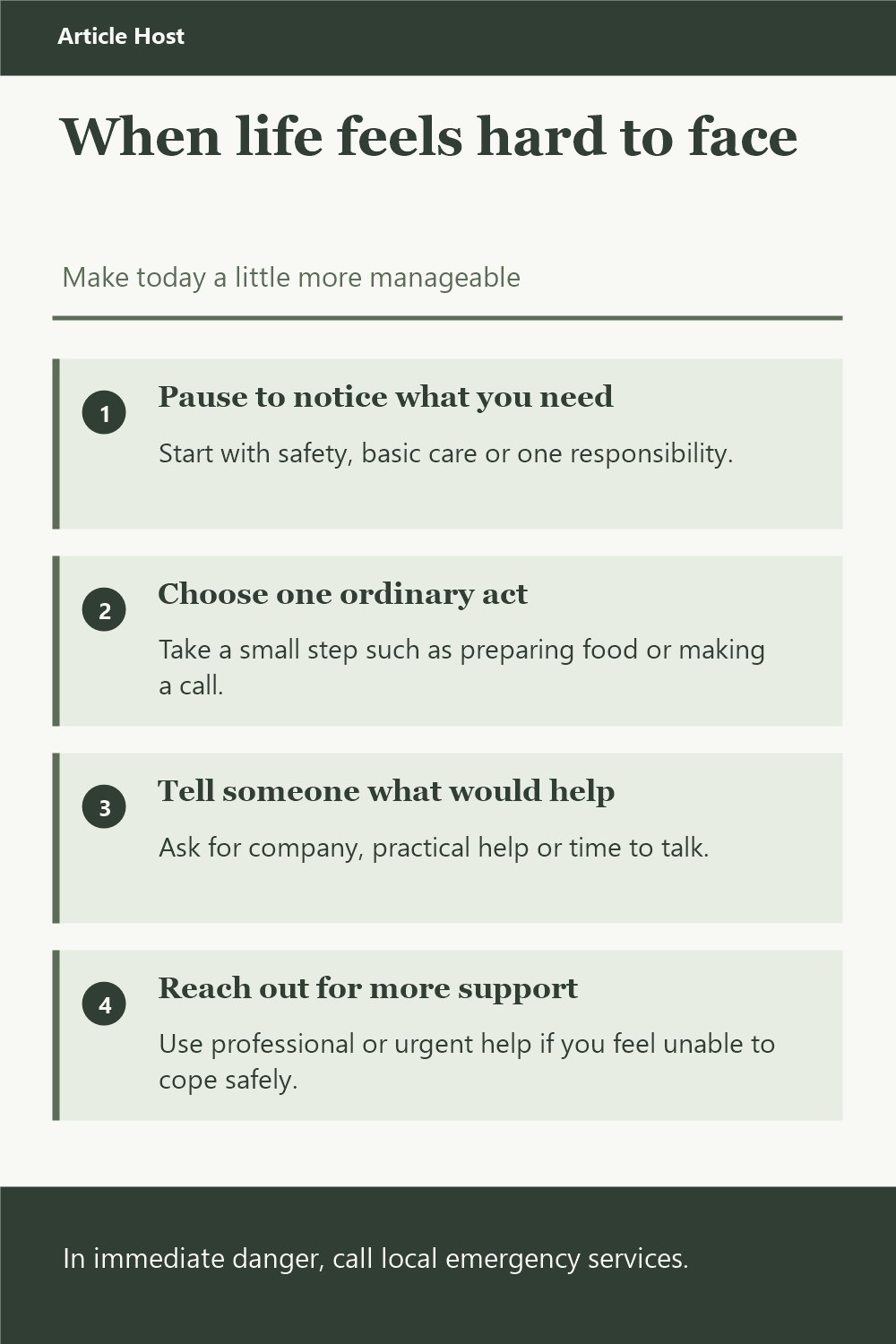
Read the infographic in text
When life feels hard to face
Make today a little more manageable
- Pause to notice what you need Start with safety, basic care or one responsibility.
- Choose one ordinary act Take a small step such as preparing food or making a call.
- Tell someone what would help Ask for company, practical help or time to talk.
- Reach out for more support Use professional or urgent help if you feel unable to cope safely.
In immediate danger, call local emergency services.