

Caring for yourself can be difficult when work, family or other people’s needs fill the day. A useful starting point is to notice one need that is being missed and what would make it easier to meet. Self-care does not have to become another long list of things you should accomplish.
You can care about other people and need rest, privacy, food, company or help yourself. Having needs is not a failure of generosity. Some pressures also need changes in workload, services or shared responsibilities, rather than more effort from you.
In this article
Look at the demands before adding another routine
List a few of the responsibilities taking your time. Which are essential today, which can wait, and which could someone else share? Include the work of planning, remembering and arranging care, as well as the visible tasks.
Choose one form of care that fits the actual difficulty. If you have not eaten, a complicated relaxation routine may miss the immediate need. If you are lonely, a practical message asking for company may be more useful than another task to do alone.
A manageable change might be keeping an easy meal available, sitting down during a task or arranging cover for one appointment. Small changes do not resolve every pressure, but they can make a particular part of the day more workable.
Use fairer words when a day goes badly
Instead of calling yourself lazy or weak, describe what happened: “I had three competing demands and did not finish this one.” That leaves room to decide what help or adjustment is needed.
You do not have to replace every difficult feeling with a positive statement. Disappointment, anger or sadness may tell you something about your circumstances. You can acknowledge a feeling without using it as a verdict on your worth.
A pause can be brief and ordinary: drinking something while seated, looking away from a screen or leaving a non-urgent chore until later. Choose something comfortable. Rest is still worthwhile when it does not make you immediately productive again.

Protect a workable amount of time and attention
Notice how a particular app or conversation affects you. You could mute selected notifications, leave a stressful discussion or choose a convenient time to reply. Social media can also provide useful company and information; there is no single rule that suits everyone.
Try a specific limit: “I can help for half an hour, but I cannot stay all evening.” If a responsibility cannot simply be declined, ask who else can share it or what support is available. A limit may need planning and cooperation to become workable.
When work follows you home, clarify what is genuinely urgent and who is responsible outside working hours, where you have room to do so. If there is a power imbalance or risk of retaliation, consider advice from an appropriate workplace representative before announcing changes.
Make everyday care accessible and affordable
Protect opportunities for rest as far as your circumstances allow. Caring duties, pain, shift work and housing conditions may make this hard. Persistent sleep difficulties or exhaustion deserve a conversation with a healthcare professional; they are not proof that you lack discipline.
Buying something is optional. A treat can be pleasant if you want it and can afford it, but a new phone, massage or meal out is not the price of caring for yourself. Borrowing a book, wearing comfortable clothes or asking for help can cost little or nothing.
Choose activities and company that fit your preferences, access needs and beliefs. You do not need to perform a fashionable version of wellbeing or disclose private experiences to be accepted. Spiritual reflection can be meaningful if you want it, alongside practical care.
If advice assumes money, uninterrupted time or physical abilities you do not have, adapt it or set it aside. The useful question is whether it helps your life, not whether you have followed someone else’s routine correctly.
Ask for concrete help and review what changes
Try naming a task: “Could you collect the groceries on Tuesday?” or “Can we divide the appointment calls?” Specific requests can make it clearer what support would help, while leaving the other person able to explain what they can offer.
If help is unavailable, that does not make the need disappear. A care service, community organisation, workplace contact or trusted person may know another route. Ask about eligibility, cost and privacy rather than assuming a service will meet every need.
After trying a change, ask whether it reduced pressure or created more work. Keep what helps, adjust what does not and avoid measuring care only by how much you accomplish for others. You deserve consideration even on a day when little gets done.
Read the infographic in text
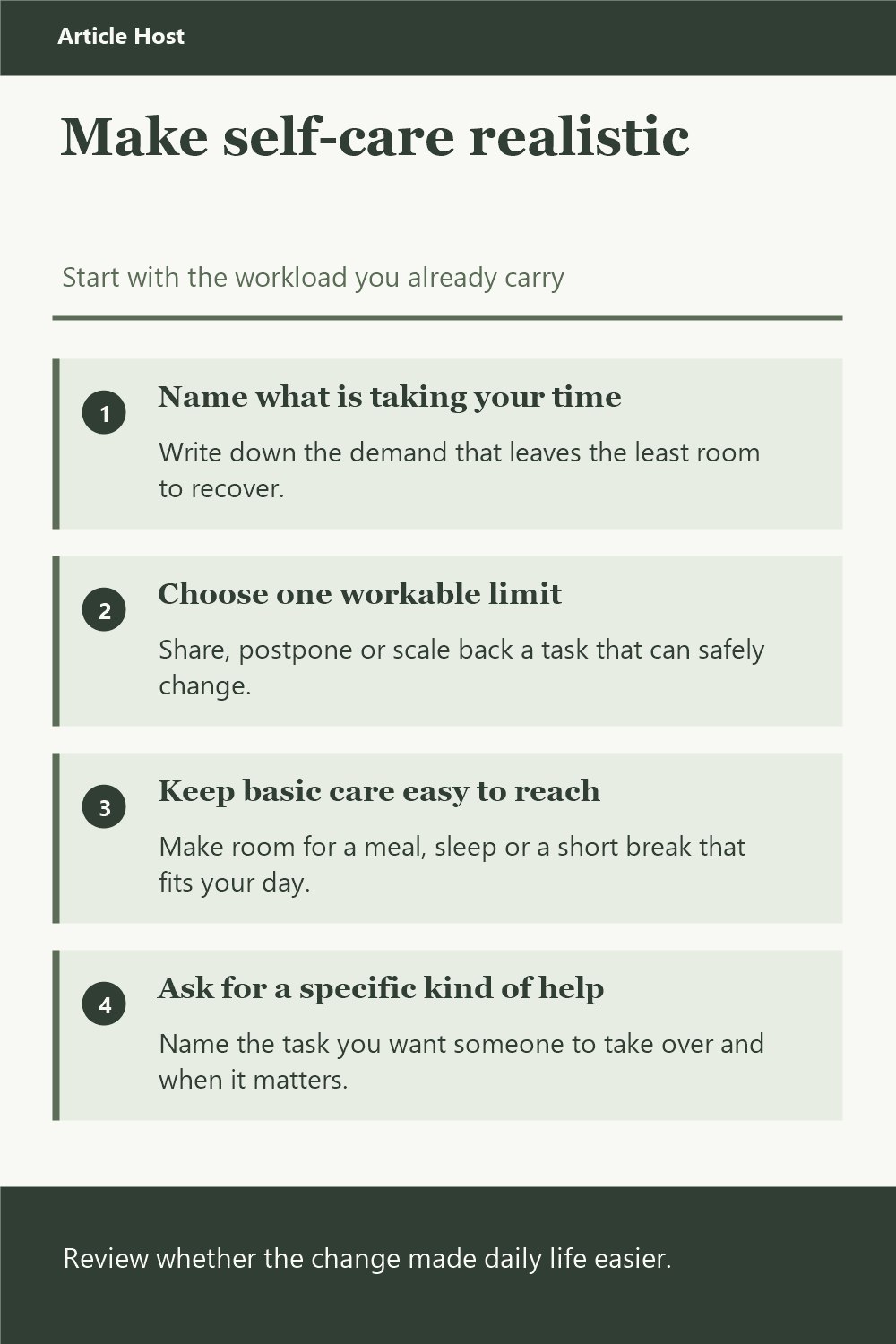
Make self-care realistic
Start with the workload you already carry
- Name what is taking your time Write down the demand that leaves the least room to recover.
- Choose one workable limit Share, postpone or scale back a task that can safely change.
- Keep basic care easy to reach Make room for a meal, sleep or a short break that fits your day.
- Ask for a specific kind of help Name the task you want someone to take over and when it matters.
Review whether the change made daily life easier.