

Repeated insults, humiliation or threats can be harmful even when there is no physical injury. If someone’s words leave you afraid to speak, question your worth or feel controlled, you deserve support in understanding what is happening.
There is no fixed future for a person who has experienced verbal abuse. Harm can be serious without meaning that you are permanently damaged, destined to develop another condition or likely to become abusive yourself.
On this page
Recognise the behaviour
A disagreement or an occasional clumsy remark is different from a pattern of degrading, intimidating or controlling someone. Examples can include repeated name-calling, threats, public humiliation or insults used to silence a concern.
In intimate relationships, verbal conduct can be part of psychological aggression. The CDC’s explanation of intimate partner violence includes psychological harm and control, alongside other forms of abuse.
You do not have to know a person’s private intention before deciding that you do not want to be spoken to in a particular way.
Take the impact seriously
You may feel hurt, embarrassed, uncertain or reluctant to disagree. Another person may respond differently. Neither response determines whether the conduct matters.
Avoid ranking verbal and physical abuse as though one always heals and the other never does. Different experiences can affect people in different ways, and each deserves appropriate care.
If you have ongoing physical or emotional symptoms, speak with a health care professional rather than assuming that one event explains a diagnosis. Support can address what you are experiencing now without predicting the rest of your life.

Choose support without needing perfect proof
Tell a trusted person about a specific incident and how it affected you. You might say, “This keeps happening, and I need help thinking about what to do.” You do not need a visible mark or a complete record before asking someone to listen.
An individual counsellor or domestic abuse advocate can help you consider your options. If you record incidents or save messages, do so only when it is safe and keep the material somewhere the person cannot access.
Consider boundaries and safety
When it is safe, a brief boundary can identify what you will do: “I will not continue this conversation while I am being insulted.” You cannot make another person respect it by finding perfect wording.
If there are threats, control or fear of retaliation, prioritise private support and a plan suited to your circumstances. In the United States, contact the National Domestic Violence Hotline at 800-799-7233. Elsewhere, contact a local service. For immediate danger, contact local emergency services.
You are not responsible for another person’s decision to harm you. A next step can be as small as telling someone, seeking care or asking what support is available.
When an insult is followed by a threat
Suppose someone insults you during an argument and later threatens to block access to money if you tell anyone. Think about whether a private device, trusted person or safe meeting place is available before writing a note or raising the issue.
You can talk privately to a domestic abuse advocate about options. Keep records only when it is safe to do so. If immediate danger develops, use local emergency services when you can safely reach them.
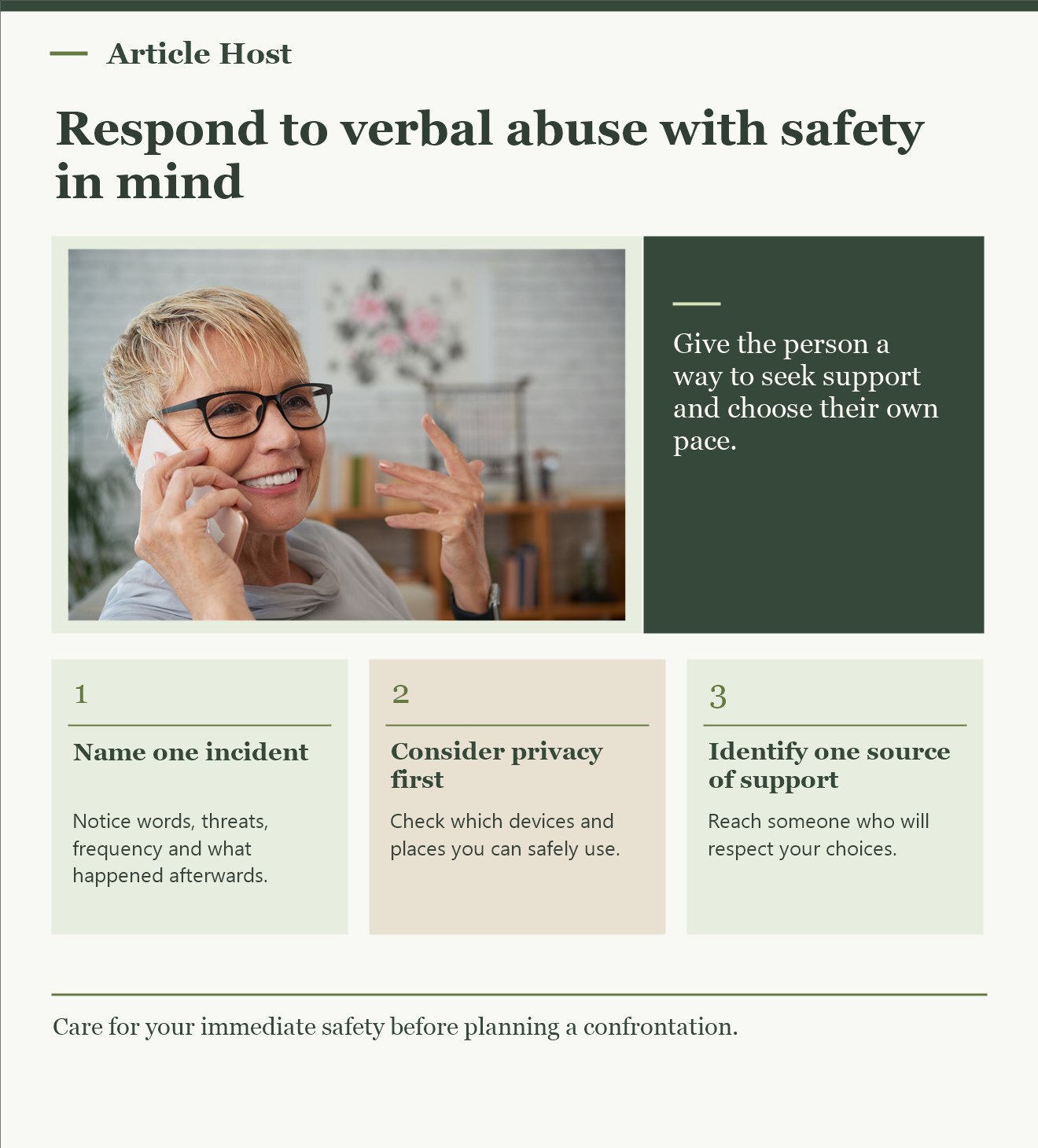
Read the infographic in text
Respond to verbal abuse with safety in mind
Give the person a way to seek support and choose their own pace.
- Name one incident Notice words, threats, frequency and what happened afterwards.
- Consider privacy first Check which devices and places you can safely use.
- Identify one source of support Reach someone who will respect your choices.
Care for your immediate safety before planning a confrontation.
Frequently asked questions
1. Can verbal abuse happen without yelling?
Yes. Threats, repeated humiliation and intimidating remarks can happen quietly. Consider what is said, the pattern and its effects on your freedom or safety.
2. Should I confront the person about what they said?
Consider your safety first. You can seek private support before deciding whether to discuss it, especially if the person threatens, monitors or punishes you.
3. What if they can see the messages on my phone?
Think about a safer way to reach someone, such as an in-person conversation or access to a device the other person cannot monitor.
4. Do I have to keep a record?
You can seek help without a written record. If you decide to keep one, check whether it can be stored privately and safely.
5. Who can I ask for help?
Consider a trusted person, a qualified counsellor or a local domestic abuse service. Contact local emergency services if you face immediate danger and can do so safely.