

On a busy day, choose one result you’d be relieved to finish. It might be sending a revised estimate, booking an appointment or drafting the first page of a report. The habits I’ve found helpful start with making that next step small enough to fit the time available.
Decide what needs your attention
List what’s on your mind. Mark the task with a real deadline or consequence, then turn it into a visible next action. “Email Pat to confirm the delivery date” is easier to start than “sort out deliveries.” Give routine tasks their own slot so they can wait while you work on the priority.

Make one work block easier to use
- Set a finish line. Decide what you can do in the time you have. If you have 20 minutes, aim to outline the report or verify the numbers.
- Get the materials ready. Open the document, check that you have the information you need and keep a short list of questions to ask.
- Reduce one distraction. Close the extra tabs, silence optional notifications or tell people when you’ll be available. Keep urgent channels open when the job requires it.
- Leave a little space. A short break can give you time to stretch, get water or decide whether your original plan still makes sense.
Adjust when the plan changes
If you’re missing information, ask for the specific answer that would let you move forward. If someone gives you an urgent task, name what will have to wait. Try, “I can finish the delivery check today. Can the invoice review move to tomorrow?” When you’re done, back up important work as appropriate and leave yourself a one-line note about where to pick up.
A crowded-day plan with a fallback
Imagine an afternoon with a school pickup and a report due by four. Use the first usable twenty minutes for figures that someone else needs. Agree on who can send the later summary if a call runs long. Keep a note of where to restart.
When changes arrive, use your fallback and tell anyone whose deadline now depends on it. At the end of the day, move unfinished work with a clear first action rather than starting the list again.
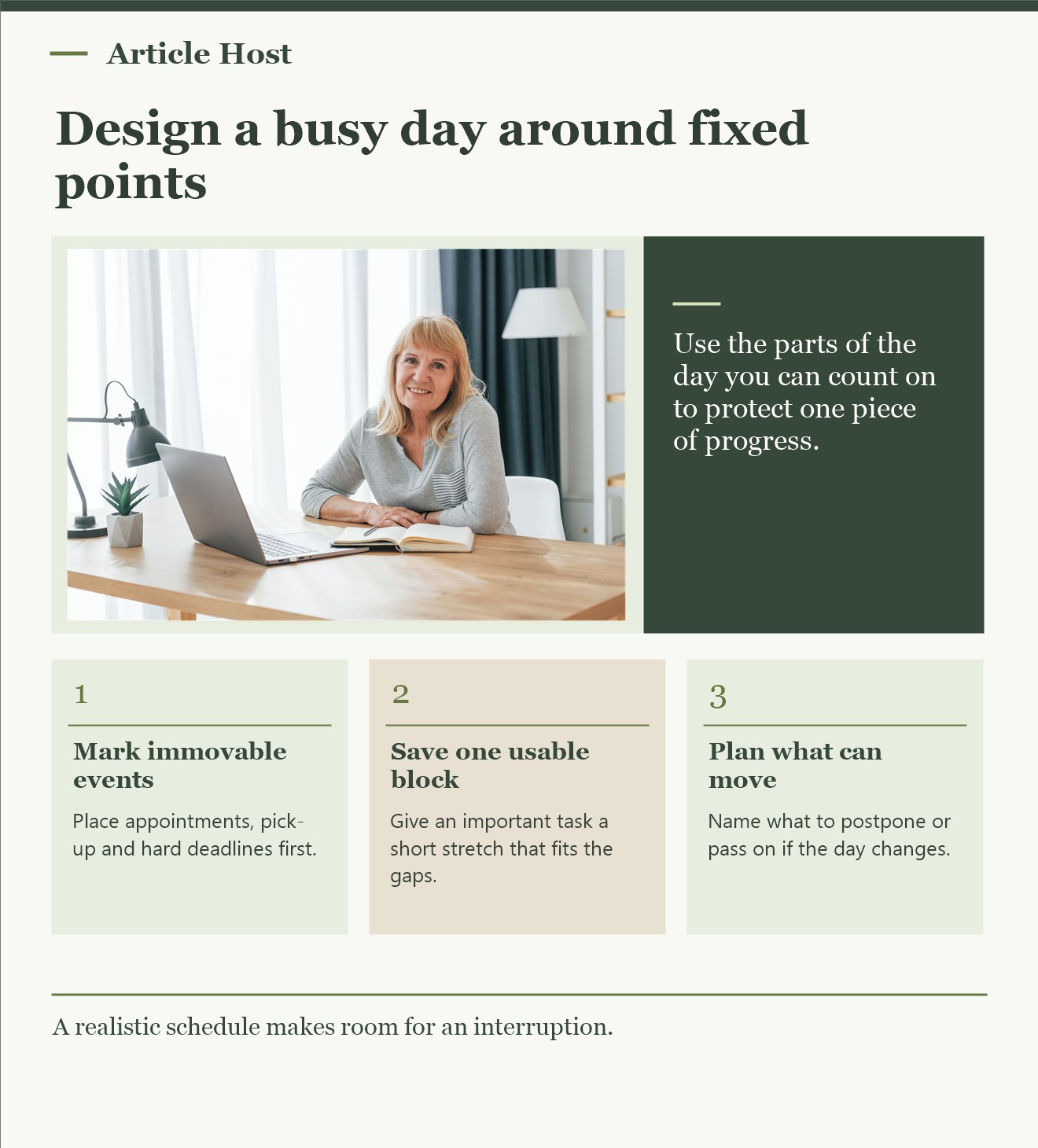
Read the infographic in text
Design a busy day around fixed points
Use the parts of the day you can count on to protect one piece of progress.
- Mark immovable events Place appointments, pick-up and hard deadlines first.
- Save one usable block Give an important task a short stretch that fits the gaps.
- Plan what can move Name what to postpone or pass on if the day changes.
A realistic schedule makes room for an interruption.