

When something happens at work, write down what you observed and what changed as a result. A clear account can help you decide whether to raise it, even if you’re unsure whether the conduct fits your workplace’s definition of bullying.
Public humiliation
Examples include mocking your work, shouting or using insults in front of others. If you feel safe doing so, ask to continue the discussion privately or return to the specific work issue.
Repeated intimidation
Someone may threaten you, flood you with hostile messages or pressure you to agree on the spot. Step away if you can and keep messages you are permitted to retain.
Misuse of supervisory authority
Pay attention to repeated changes in expectations, threats over reasonable questions or retaliation after you raise a concern. Look for a reporting route outside the person’s supervision if one is available.
Exclusion from information or meetings
If you keep missing instructions or being left off meetings you need for your work, record what you were excluded from and how it affected the task. Request the information directly in writing when that feels appropriate.
Rumours and personal attacks
Distinguish what you heard firsthand from what others told you. If you speak to a manager or HR, focus on specific conduct and its impact on your work.

Decide what to do next
Keep a dated record with exact wording where possible, any witnesses and the steps you took. Check your workplace’s reporting procedure and consider speaking with HR, a union representative or a trusted manager. You can seek support without confronting the person alone.
See also how to recognize harmful behaviour and decide what to do.
Document a pattern without losing the practical detail
If a manager repeatedly takes you off work chats and later says you missed an instruction, note the dates, the task affected and any available messages. Record what you saw directly and label anything you heard from someone else.
Read the reporting policy and consider who can help, such as a union representative or a health and safety contact. Ask how confidentiality works before sharing a detailed record, and follow local rules and workplace policies for handling records.
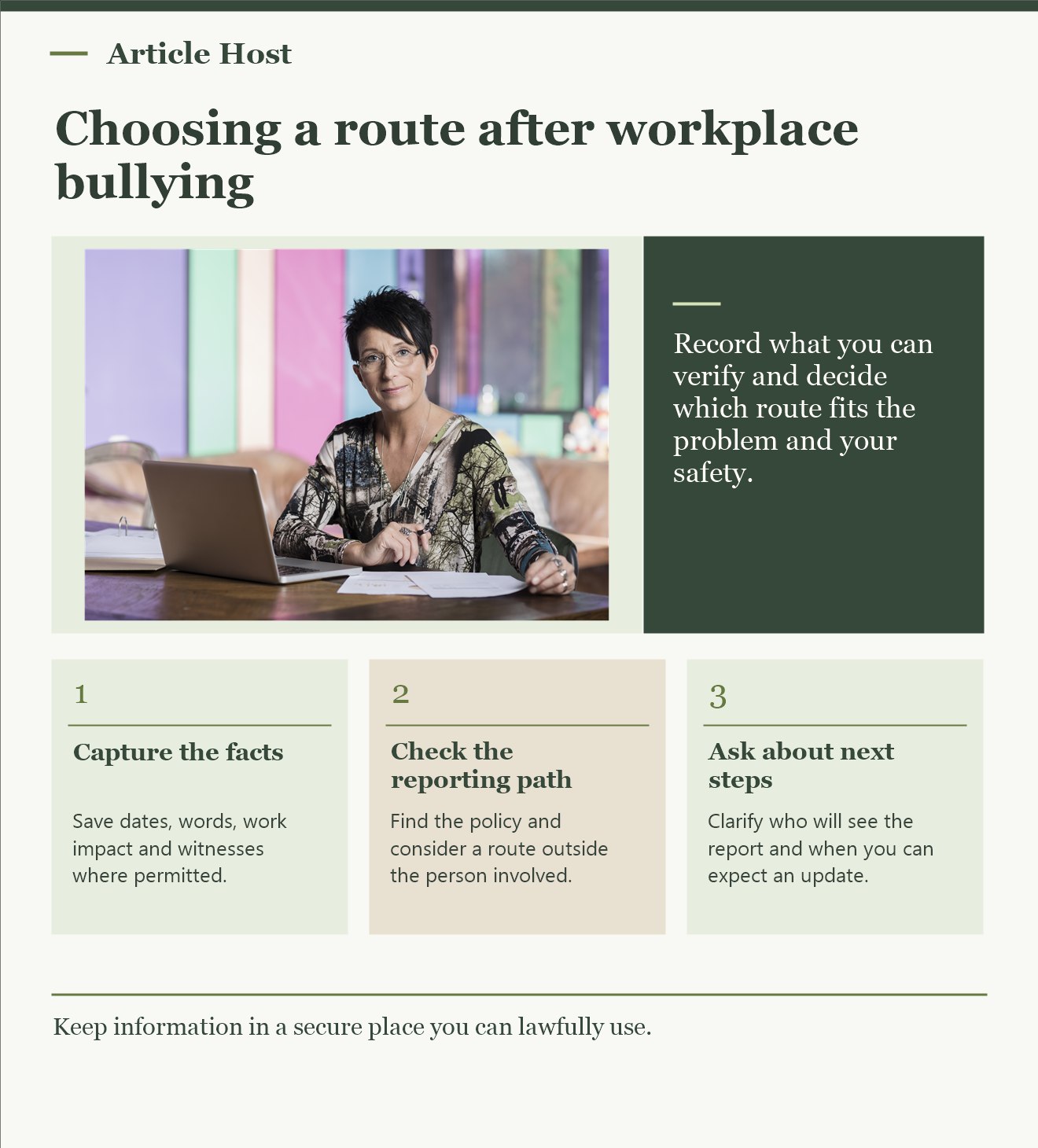
Read the infographic in text
Choosing a route after workplace bullying
Record what you can verify and decide which route fits the problem and your safety.
- Capture the facts Save dates, words, work impact and witnesses where permitted.
- Check the reporting path Find the policy and consider a route outside the person involved.
- Ask about next steps Clarify who will see the report and when you can expect an update.
Keep information in a secure place you can lawfully use.
Frequently asked questions
1. What should I write down after a workplace incident?
Record the date, approximate time, people present, what you directly saw or heard, and any effect on the work. Follow workplace rules for keeping records.
2. Who can help if my direct manager is involved?
Check your workplace policy for another reporting route. A union representative, occupational health and safety contact or designated reporting officer may be able to explain the options.
3. What if I only know of one incident?
Record the incident. A single serious threat or other serious conduct can still need immediate attention even before you know whether a pattern exists.
4. Should I copy internal documents to a personal account?
Check policy and applicable law before copying work information. Ask an appropriate adviser how to document what happened without exposing confidential material.
5. What can I ask after making a report?
Ask who receives the report, how the process handles confidentiality, what immediate support is available and when to expect an update.